Why Is My New Mattress Hurting My Back?
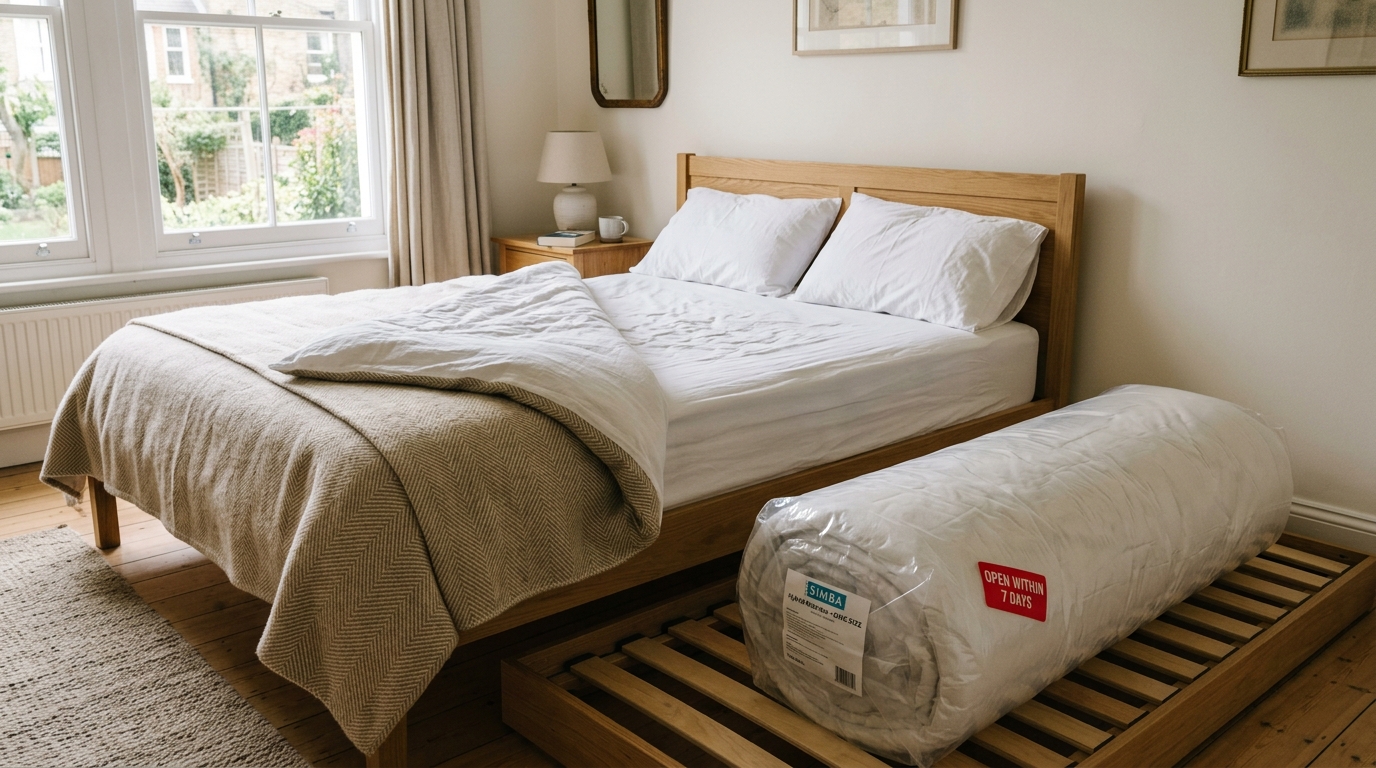
A vacuum-sealed mattress unboxed and flopped onto should feel like an upgrade, not a punishment. If you’re waking up with a stiff lower back after the first few nights, the pain usually isn’t a faulty mattress—it’s your body adjusting to a new surface, or a setup error like a sagging bed base. Here’s why it hurts and exactly how to fix it before your return window closes.
The “Sick Leave” Timeline: How Long Should You Suffer?
A new mattress often causes back pain for the first two to four weeks. Your muscles and ligaments have to re-learn how to support your spine on a surface with a completely different firmness level, which is a normal physical reset. The materials inside the mattress are also settling and losing their initial factory stiffness during this time.
If you are still waking up with a stiff lower back after 30 days, the pain is no longer just an adjustment issue. At that point, the mattress is likely the wrong firmness for your specific sleeping position, or your slatted bed base is sagging and failing to support the core. Most UK online retailers offer a 30-day sleep trial, which perfectly covers this adjustment window. If you’re still sore after the month, it’s time to consider a return.
The “Vacuum Pack” Trap: Did You Wait 72 Hours?
A lot of UK mattresses arrive compressed in a plastic bag to keep shipping costs down. The problem? Sleeping on a still‑shrinking mattress means it can’t contour to your body, and you end up with pressure points that translate into back pain.
How to Unpack a Mattress to Avoid Back Pain
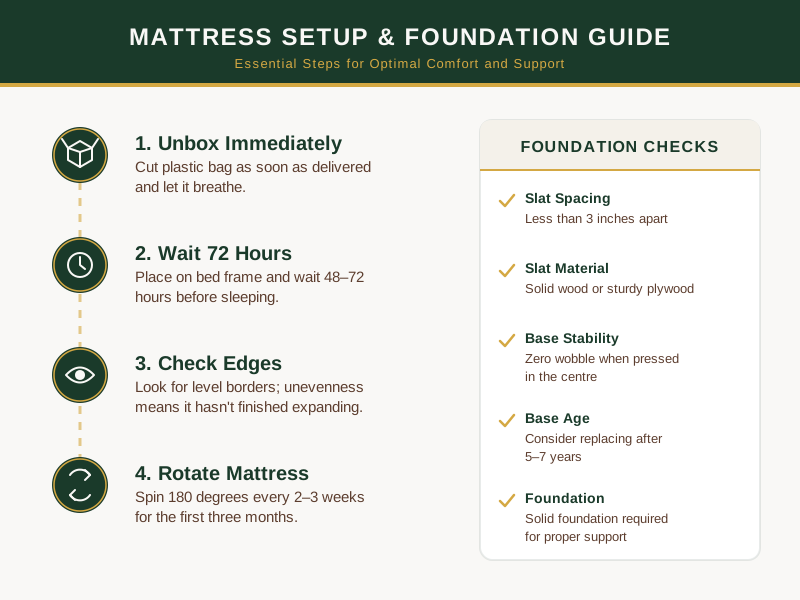
Step 1: Unbox immediately Cut the plastic bag as soon as the mattress is delivered and let it breathe. Leaving it compressed in the box for weeks can permanently damage the foam core.
Step 2: Give it 72 hours Place the mattress on your bed frame (or a temporary flat surface) and wait 48–72 hours for it to fully expand before sleeping on it.
Step 3: Check the edges Look closely at the borders. They should be level with the centre, not bulging or sunken. If they look uneven, the mattress hasn’t finished expanding yet.
One buyer learned this the hard way when they tried a memory‑foam topper straight out of the box in a freezing cold flat. After a night on the half‑inflated core, they woke up feeling like they’d slept on a board. A quick look at the expansion rules saved them a week of misery.
The Bed Base Audit: Is Your Foundation the Problem?
A proper mattress needs a solid foundation. In the UK, slatted bed bases are the norm, but not all slats are created equal. The National Bed Federation points out that placing a new mattress on an old, unsupportive base can completely ruin its lifespan and support. If the slats are spaced more than 3 inches (roughly 75 mm) apart, or the frame is flexing under your weight, the mattress will sag and your spine won’t stay aligned – the perfect recipe for back pain.
Bed Base Checklist
- Slat spacing: Are they less than 3 inches apart?
- Slat material: Solid wood or sturdy plywood, not flimsy pine that bows when you press it.
- Support: There should be zero wobble when you press down in the centre of the bed.
- Age: Older bases lose rigidity; consider replacing them after 5–7 years.
A common story I hear from flat‑dwellers in Leeds is a “soft” slatted base that looks fine but lets the mattress dip in the middle, making the whole bed feel like a pancake. Adding a bunk board (a thin piece of plywood) between the slats and the mattress often does the trick without a full frame replacement.
The Rotation Routine: Breaking It In the Right Way
New mattresses need a bit of redistribution to avoid a permanent dip where you usually lie. You should rotate the mattress 180 degrees every 2–3 weeks for the first three months. This spreads the wear evenly and helps the core settle into a uniform shape.
Pull the mattress off the frame (most modern frames have removable side rails), spin it so the head end becomes the foot end, and drop it back in. If your mattress is double‑sided, turn it over after the first month too. It’s a bit of a faff, especially on your own, but it makes a real difference.
One owner ignored rotation on a hybrid foam mattress and, after a few weeks, a noticeable dip formed right where they sleep. A simple rotation schedule would have prevented that, and the pain that followed. For more practical fixes like this, have a look through our blog.
How Do You Know If You Bought the Wrong Mattress?
You know you bought the wrong mattress if you are still waking up with back pain after four weeks of daily use on a solid bed base. If the pain persists past this adjustment window, the firmness likely doesn’t match your sleeping position.
Even after the sick‑leave period, rotation, and a solid base, a mismatch will ruin your sleep:
- Side sleepers need a soft‑to‑medium feel so the shoulders can sink in without twisting the spine.
- Back sleepers benefit from a medium‑firm surface that keeps the lower back supported.
- Stomach sleepers often require a firm mattress to prevent the hips from sagging too much.
If you’re a back sleeper on a mattress that feels too soft, the spine will flatten too much, leading to that dreaded lower‑back ache. Conversely, a side sleeper on a mattress that’s too firm will feel pressure on the hips and shoulders.
The NHS guidance on back pain stresses that keeping your spine aligned in its natural curve is vital. Consumer groups like Which? also note that many UK buyers choose the wrong firmness because they base the decision on price rather than body weight and sleep style. If after four weeks the pain persists, it’s time to use that 30‑day return window and look for a better fit.
Frequently Asked Questions
How long does it take for a new mattress to break in?
Most mattresses need two to four weeks to fully expand and settle into their true firmness. If you’re feeling sore, first check your bed base and make sure you’ve been rotating the mattress as advised. Anything beyond four weeks likely means the mattress simply isn’t right for your body.
Is it normal to wake up sore after buying a new mattress?
Yes, a little soreness in the first fortnight is completely normal because your muscles are adjusting to a new level of support. However, if the pain sticks around after the four‑week mark, you need to re‑evaluate your bed base, your rotation routine, and whether the firmness actually suits your sleeping position.
Can a bad bed base cause back pain on a new mattress?
Absolutely. A slatted base with gaps wider than 3 inches, or one that’s bowed over time, will let the mattress sag. This strips away the support your spine needs and leads straight to lower back pain, regardless of how much you spent on the mattress itself.
Bed Base Support Checklist
| Check | Requirement |
|---|---|
| Slat Spacing | Less than 3 inches apart |
| Slat Material | Solid wood or sturdy plywood |
| Base Stability | Zero wobble when pressed in the centre |
| Base Age | Consider replacing after 5–7 years |
| Foundation | Solid foundation required for proper support |
Ready to Start?
You now have a clear roadmap: give the mattress 48–72 hours to expand, audit your slatted base, stick to a rotation schedule, and match firmness to your sleep style. If after the 30‑day “sick leave” you’re still waking up sore, That the mattress isn’t right—use the return policy and start fresh. If you’re dealing with a nightmare landlord bed or a specific issue and need advice, feel free to get in touch or browse the RestWell UK guides.
Ready to make sure every part of your sleep environment is spot on? Get the Free Sleep Better Checklist and walk through each step with confidence.
Sleep is too precious to waste on a back‑pain‑inducing mattress. Fix the setup, give it time, and you’ll be back to waking up refreshed – or you’ll know exactly when to send it back and choose a better one. Cheers to a pain‑free night ahead.
Related Guides
For a complete overview, see our Why Is My Mattress Sagging in the Middle?.
Further Reading
Note: General guidance only, verify details with a qualified professional or official source.