Why Is My Memory Foam Mattress So Hot?
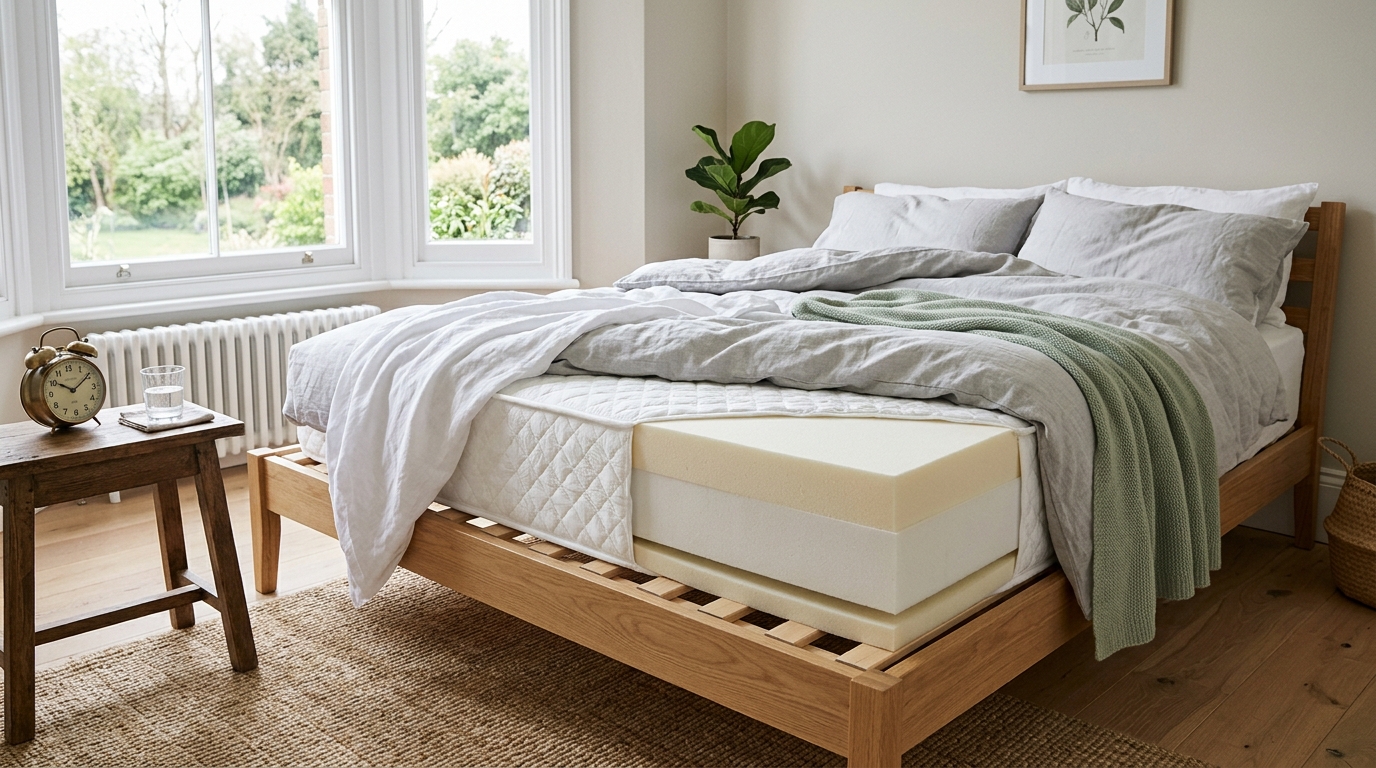
Waking up drenched in sweat on a memory foam mattress feels like a personal betrayal. You are not imagining it: the dense structure of traditional memory foam actively absorbs and traps your body heat. But in a British bedroom, it is rarely just the mattress at fault. Poor airflow, single-glazed windows, and high indoor humidity create a damp micro-climate that makes a warm bed feel suffocatingly sticky. Here is exactly why your mattress is running like a furnace, and how to cool it down tonight without throwing money at a new bed.
Why Does Memory Foam Trap So Much Heat?
Memory foam traps heat because it is made from dense, closed-cell polyurethane that relies on your body temperature to soften and mould to your shape. As you sink into the mattress, the foam wraps tightly around you, eliminating air gaps and creating a “heat island” where your body heat has nowhere to escape.
Because standard foams are closed-cell, the tiny air pockets inside the material are completely sealed off. Heat simply cannot circulate away from your body. The result is a cosy but ultimately stifling surface that quickly starts to feel like lying on a warm slab.
The effect is most obvious the first night you swap an old spring mattress for cheap memory foam, especially when the room is already humid after rain. The foam hugs tighter than a duvet, and you can wake feeling as if you have run a marathon in your sleep.
If you can, flip or rotate your foam mattress every few months. Changing the pressure points can slightly improve airflow through the edges.
The UK “Damp vs. Heat” Confusion
Most of us think “hot” and “humid” are separate problems, but in a British bedroom, they are two sides of the same coin. High humidity – the kind that makes windows fog after a drizzle – stops sweat from evaporating. According to Asthma + Lung UK , indoor humidity should ideally sit between 30% and 50%. When it creeps higher than that, your skin cannot cool itself, so the heat you feel from the foam feels noticeably stickier.
Single‑glazed windows, thin walls, and drying clothes on radiators all contribute to a damp micro‑climate in the bedroom. Even if the thermostat reads 20 °C, the relative humidity can easily sit at 80 % in an older flat, turning any heat‑retaining surface into a sweat‑trap.
Turning the heating up to 22 °C on a cold night often just raises the room’s moisture level. You wake up drenched not because the foam suddenly got worse, but because the air cannot take any more water.
Immediate Fixes: Changing Your Bedding
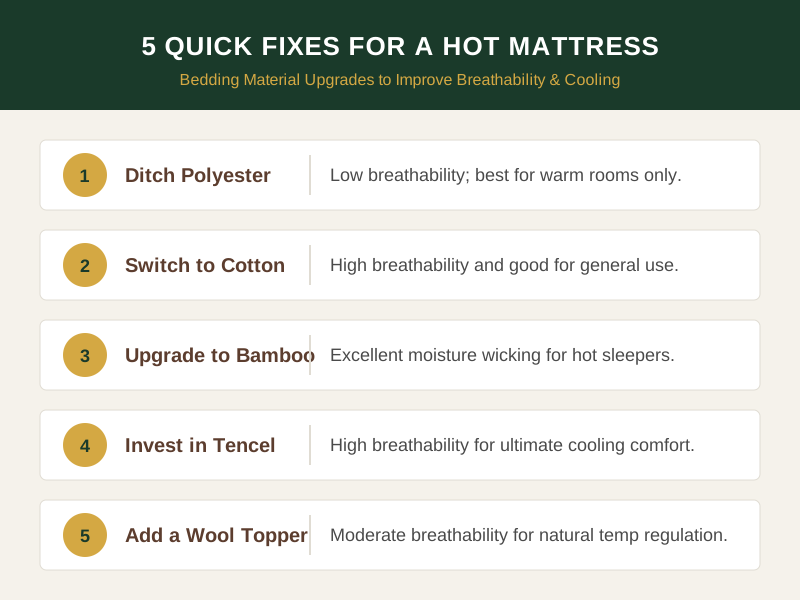
The layer closest to your skin is the easiest place to start. Synthetic weaves like polyester are notorious for trapping heat; they act like a second skin that stops moisture from escaping. If you want to stop waking up sweating, swap them for natural fibres.
- Cotton rule: Egyptian or long‑staple cotton sheets pull sweat away and let it evaporate. They are breathable and feel cool to the touch.
- Bamboo bonus: Cheap bamboo sheets feel a touch silky, but more importantly they stay dry through a night of heavy rain. The wicking action is absolutely worth the investment.
- Light duvet: Ditch the heavyweight winter tog in favour of a thin, breathable duvet or even just a sheet if the room is mild enough.
- Pillow factor: A cooling pillowcase (often made from Tencel or bamboo) can stop your head from becoming a heat‑trap.
A cheap polyester duvet might “save” a few quid, but it turns the bed into a furnace. Switching to a light cotton duvet can cut night‑time temperature by about two degrees – a difference you can feel without needing any gadgets.
The Sleeping Hot Checklist:
- Replace polyester sheets with cotton or bamboo.
- Use a lightweight duvet or a breathable sheet‑only setup.
- Add a cooling pillowcase.
- Keep the bedroom temperature between 16‑18 °C if possible.
Now that you’ve got the bedding sorted, you are ready for the next step – the room itself. Get the Free Sleep Better Checklist – it walks you through a quick audit of your bedroom’s climate.
Ventilation & Room Management
Even the best bedding cannot out‑perform a room that is constantly choking on stale air. Here is how to give your foam some breathing room without turning your bedroom into a wind tunnel.
- Fan strategy: Point a pedestal fan at the far wall rather than straight at the mattress. The airflow circulates the whole room, helping heat dissipate without blowing dust directly onto the foam.
- Ventilated protector: A mattress protector with built‑in vents or a bamboo cover lets air move through the top layer. A solid waterproof vinyl protector can keep the mattress warm for hours after you get up. Swapping to a vented one is a massive relief.
- Window breathing: The Energy Saving Trust recommends opening windows regularly to let moist air escape. Even cracking a window for ten minutes before bed can drop indoor humidity by 5‑10 %.
- No blanket rule: On milder nights, sleep without a duvet entirely. Let the foam “breathe” – you will be surprised how much cooler you feel.
These tweaks are cheap enough to be a bit of a faff, but they are belt‑and‑braces solutions that keep the heat from building up in the first place.
Pro tip: Place a dehumidifier in the bedroom during the damp months. A modest unit can pull the relative humidity down to a comfortable 50 %, making the foam feel noticeably cooler.
When to Switch Mattresses (The Long‑Term Fix)
If you’ve tried bedding swaps and ventilation tricks and the mattress still feels like a hot slab, it might be time to look at the foam itself. As we often mention, not all memory foams are created equal.
- Open‑cell foam: Unlike the closed‑cell type, open‑cell structures have tiny channels that let air move through, cutting the heat‑island effect.
- Gel‑infused foam: Gel beads absorb and disperse heat, giving a cooler surface. Swap a standard foam for a gel‑infused model and the sheets are more likely to stay dry even in a July heatwave.
- Zoned cooling layers: Some mattresses place a cooling layer at the head or foot, which can be enough to stop full‑body overheating.
- Topper route: If a new mattress feels out of reach, a high‑quality wool or bamboo topper can provide the same breathability boost for roughly £100‑£150 – a fraction of a new bed’s cost.
Budget‑conscious shoppers should remember that a premium open‑cell mattress can run £500‑£800, but a decent gel‑infused topper often sits around £120‑£180 and delivers comparable cooling. It is not cheap, but not a con either – a solid middle ground for most renters.
Frequently Asked Questions
Is my memory foam mattress defective if it’s hot?
No. Heat retention is just how traditional memory foam works. It relies on your body heat to soften and mould to your shape. If you also notice a musty smell or damp patches, that is almost certainly the room’s humidity settling into the foam rather than a fault in the mattress itself.
Can I put a cooling topper on a hot mattress?
Yes, absolutely. Look for toppers made from naturally breathable materials like wool, bamboo, or latex. Adding a synthetic memory foam topper over an already hot mattress will just trap more heat and defeat the entire purpose.
Why do I sweat more on memory foam than on a spring mattress?
Memory foam conforms tightly to your body, creating a much larger contact area that holds your body heat against your skin. Pocket sprung or traditional coil mattresses have massive air gaps inside them that let heat escape naturally, so they feel much cooler by comparison.
Bedding Material Comparison
| Material | Breathability | Moisture Wicking | Best For |
|---|---|---|---|
| Polyester | Low | Poor | Warm rooms only |
| Cotton | High | Good | General use |
| Bamboo | High | Excellent | Hot sleepers |
| Tencel | High | Excellent | Cooling comfort |
| Wool | Moderate | Good | Temperature regulation |
What to Do Now
You have seen why memory foam gets hot, how UK dampness makes it feel worse, and the low‑cost bedding and ventilation tweaks that can sort it out tonight. If those steps still do not give you a cool night, the long‑term fixes – open‑cell foams, gel‑infused models, or a proper breathable topper – are the next logical step.
For a structured plan that walks you through each of these fixes, grab our Free Sleep Better Checklist . It will help you audit your bedroom, pick the right bedding, and decide whether a new mattress is genuinely worth the investment.
Sleep shouldn’t be a battle with your own bed. With a few practical changes, you can turn that hot, sticky night into a comfortable, dry slumber. Sweet dreams, and remember: you’ve got this sorted.
Related Guides
For a complete overview, see our Why Is My Mattress Sagging in the Middle? .
Sources
Note: Content here is general in nature. Prices, products, and guidance change — verify the details before acting.