Why Is My Mattress Sagging in the Middle?
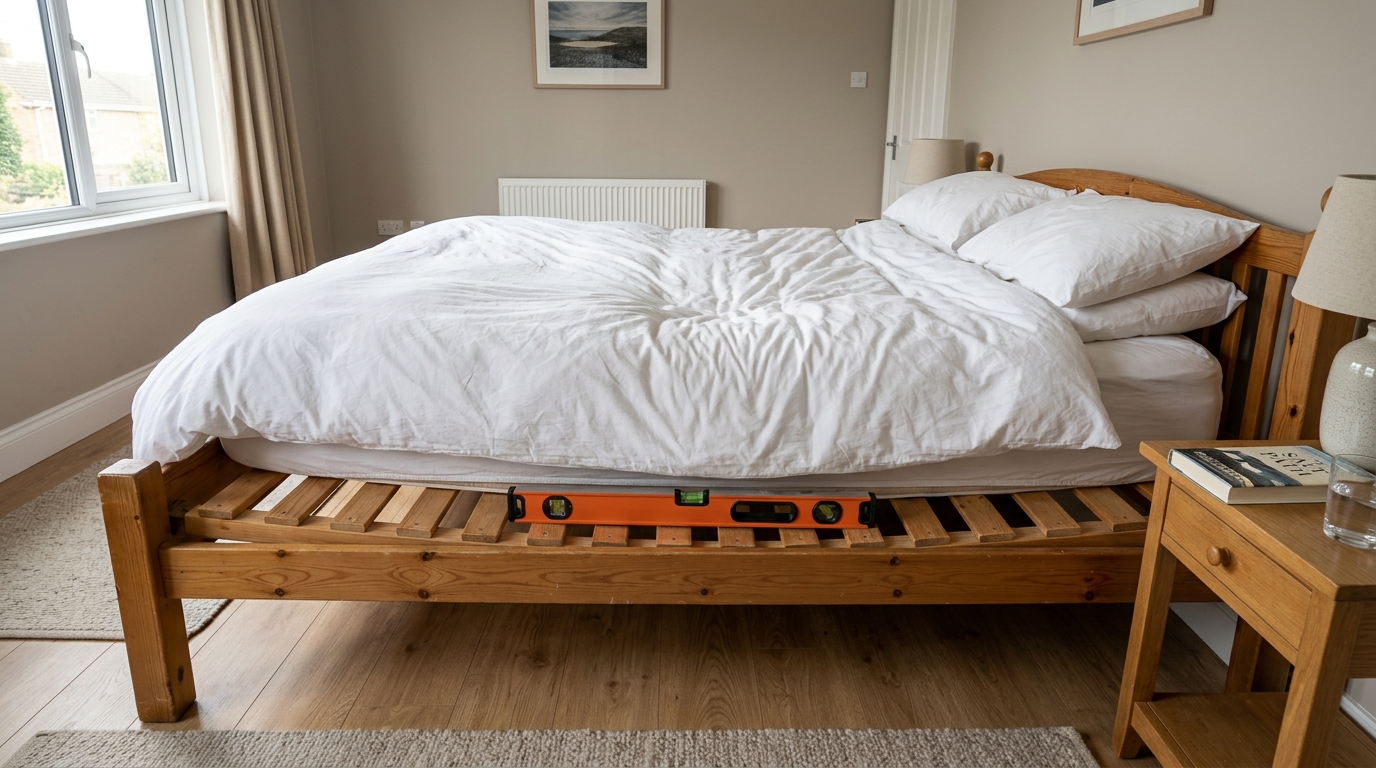
A mattress that sags in the middle feels like a personal insult. You spent good money on it, and now it’s trying to fold you in half. But that dip doesn’t always mean the mattress itself is dead. Often, the problem starts underneath you, with a foundation that wasn’t up to the job from day one.
Is Your Bed Foundation Causing the Mattress to Sag?
It absolutely can be. A weak foundation is the single most common reason a mattress develops a middle dip. If your bed frame has slats that bow, gaps that are too wide, or legs that don’t sit level, the mattress will sag under your weight even if its own materials are perfectly sound.
Your first move should be to play detective with the frame itself. A flimsy base can make even the best mattress feel terrible.
- The Finger Test: Slide your hand under the slats. If you can wiggle more than one finger between them, the spacing is too wide. That little gap lets the mattress sag under your weight.
- Check the Floor: Lay the frame on an even surface. Uneven carpet, a warped floorboard, or a sloping lino can tilt the whole thing, concentrating pressure in the centre.
- Slat Gap Calculator: In most UK double-size frames the slats should be no more than 7cm apart. Anything wider means the middle of the mattress isn’t getting enough support.
- Look for Bowed Slats: Cheap wooden slats often bow after a few months under a double mattress. If they are curving in the middle, they are doing the sagging for you.
Quick checklist for your foundation
- Remove the mattress and lift each slat – any that flex under light pressure need replacing.
- Measure the gap between slats; aim for 7cm or less.
- Place a spirit level on the frame; any tilt over 2mm is worth fixing.
- Inspect the floor beneath – use a piece of cardboard to spot low spots.
A £350 memory-foam mattress can show a dip after three weeks if the cheap metal bed frame is missing a central support bar.
What a “Normal” Sag Actually Looks Like
A dip in the middle isn’t automatically a defect – it is often just physics. Your body’s centre of gravity sits there, so the mattress compresses more in that zone.
- Normal settling: A 2.5cm (1-inch) depression after a few months of use is typical for most foam and hybrid models.
- Defect threshold: Anything deeper than 5cm (about 2 inches) within the first year is generally considered a manufacturing fault. Most UK consumer guides treat this 5cm line as the point where “satisfactory quality” under the Consumer Rights Act is breached.
- The Coin Test: Place a £1 coin in the dip. If it rolls off easily, the depression is likely over 5cm and you have got a problem.
Picture a shallow bowl where your hips settle. That “body impression” is the mattress moulding to your shape – perfectly normal. If the bowl deepens into a trench where you can feel the mattress springs or see the foam layers collapsing, that is structural failure.
A lot of people mistake the natural body impression for a permanent sag. Knowing the difference saves you a lot of pointless arguments with retailers.
DIY Fixes: Can You Save It?
Before you start hunting for a replacement, try a few cheap tricks. They won’t cure a genuine defect, but they can buy you time and make the bed feel decent again.
1. The Rigid Bed Board
A solid piece of plywood or MDF, cut to the exact width of your bed, placed under the mattress’s centre, can bridge any weak slats.
Step-by-step:
- Measure the internal width of your frame (usually 135cm for a UK double).
- Cut a board about 2cm thick – thicker boards feel firmer.
- Lay the board directly on the slats, centred under the sag.
- Replace the mattress on top and test for comfort.
The board redistributes the load, so the middle no longer dips. It is a cheap fix – you can snag a sheet for roughly £15 to £20 at B&Q – but remember it is a stop-gap. It won’t fix a warranty claim because the underlying defect remains.
2. Mattress Topper Trick
A 5cm memory-foam topper can “fill in” a shallow dip, making the surface feel even. It is especially handy if you are dealing with a minor 2.5cm depression.
A topper masks the problem but adds another layer that can affect breathability. A cheap gel-infused topper often turns into a heat trap after six months.
3. Rotation (if your mattress allows it)
Flip or rotate the mattress 180 degrees every three months. This spreads wear more evenly and can delay the sag. Not all mattresses are double-sided, so check the label first.
These DIY moves are worth the investment for a quick fix, but they don’t replace a legitimate warranty claim. If you need a longer-term solution, keep reading.
Your UK Warranty Rights Under the Consumer Rights Act
The Consumer Rights Act 2015 is the law that backs you up when a mattress sags beyond normal wear in the first year. Here is what you need to know.
- The 1-Year Rule: Goods must be of “satisfactory quality” for at least twelve months. According to Citizens Advice , a fault that develops within the first six months is presumed to have been there since purchase, making a claim much easier. Sagging more than 5cm definitely counts as a breach.
- What counts as a defect: Visible lumps, stitching coming undone, or a middle dip that exceeds the 5cm threshold. Anything that makes the mattress unfit for its normal purpose.
- How to claim:
- Document the issue – take clear photos of the dip, measure it with a ruler, and note the date of purchase.
- Contact the retailer – start with a polite email, attach the evidence, and state you are invoking the Consumer Rights Act.
- Use the Warranty Claim Script:
“Hi, I bought a [brand/model] on [date] for £[price]. The mattress now has a 5cm sag in the centre, which is beyond normal wear. Under the Consumer Rights Act 2015, I am requesting a full refund or replacement. I have attached photos and measurements for reference.”
- If they push back, remind them that “satisfactory quality” is a legal term, not a marketing slogan.
- Escalation: If the retailer refuses, you can raise the issue with Trading Standards through your local council or use the Alternative Dispute Resolution service listed on the retailer’s website.
If the retailer keeps insisting “it’s just body weight”, stick to the script above and quote the Act. You don’t have to be a legal expert – just clear and firm.
How to Stop It Happening Again
Even if you get a new mattress, the same foundation mistake can repeat the saga. Here is how to future-proof your bed.
- Keep slat spacing tight: Aim for 7cm or less. The National Bed Federation advises that tighter spacing reduces mid-bed pressure points, especially for heavier sleepers.
- Consider a solid platform: A plywood base or a purpose-built platform bed gives uniform support and eliminates the “slat gap” issue altogether. It is a bit more upfront cost (roughly £80 to £120 for a DIY board) but saves you from premature sagging.
- Rotate regularly: If your mattress is double-sided, flip it every six months; if not, rotate 180 degrees every three months. This spreads the load and keeps the centre from becoming a permanent trough.
- Mind the floor: In older Victorian flats, uneven timber joists can cause the whole frame to tilt. A simple shims kit (about £10) can level the base before you even think about the mattress.
Following these steps is the belt-and-braces approach to a long-lasting bed. If you want to look at other ways to improve your setup, you can check out our blog for more practical guides.
Quick Answers
Is sagging normal after a year?
A 2.5cm (1-inch) dip after a year is typical wear as the materials settle to your body shape. However, anything deeper than 5cm within the first twelve months is a defect, and you can claim a replacement or refund under the Consumer Rights Act.
Can I return a mattress if it sags?
Yes, you can return a sagging mattress if the dip exceeds the manufacturer’s defect threshold (usually 5cm) and you are within your warranty period. Just make sure you have photos, clear measurements, and a straight-to-the-point claim script ready before contacting the retailer.
Does a bed board void the warranty?
Usually not, but it is safest to check the manufacturer’s terms before you add one. A bed board is just a temporary fix that improves the foundation’s support; it doesn’t alter the physical mattress itself, so most warranties remain entirely valid.
Why does the middle sag more than the sides?
Your body’s centre of gravity sits squarely in the middle of the bed, meaning the mattress bears the heaviest load right in the centre. That concentrated pressure naturally compresses the springs and foam layers much faster than the edges.
Foundation Support Checklist
| Check | Action | Target | Status |
|---|---|---|---|
| Slats | Inspect for bowing | None | |
| Gap | Measure distance | ≤ 7cm | |
| Floor | Check for unevenness | Level | |
| Legs | Ensure even contact | Balanced | |
| Frame | Test rigidity | Firm | |
| Support | Verify load distribution | Even | |
| Age | Note purchase date | < 1 year | |
| Dip | Measure depression | ≤ 5cm |
Your Next Step
You’ve now got a solid diagnostic routine: start by checking the slats, measure the dip with the coin test, and decide whether a board or topper will tide you over. If the sag breaches the 5cm rule, arm yourself with photos and the simple claim script and invoke the Consumer Rights Act – you are well within your rights to demand a fix or a refund.
Ready to make sure the rest of your bedroom isn’t sabotaging your sleep? Get the Free Sleep Better Checklist and give your whole sleep environment a proper once-over. If you’ve hit a wall with a retailer or need more personalised advice, don’t hesitate to contact us – we’ll help you sort it out.
Sleep well, stay sharp, and remember: a sagging mattress is a problem you can solve without throwing away a good night’s rest.
Explore More Topics
Go deeper on specific topics:
- Why Does My Mattress Smell Musty?
- Why Is My Memory Foam Mattress So Hot?
- How Often Should You Replace Your Mattress?
- How to Dispose of a Mattress in the UK
- Why Is My New Mattress Hurting My Back?
- How to Clean a Memory Foam Mattress
- Why Is My Mattress So Heavy to Move?
- Can You Flip a Pillow-Top Mattress?
- Why Does My Mattress Creak?
- Why Is My Mattress Sagging in the Middle?: Questions Answered
Further Reading
Note: General guidance only. Verify current details with a qualified professional or official source.