How to Fix a Squeaky Bed (UK Edition)
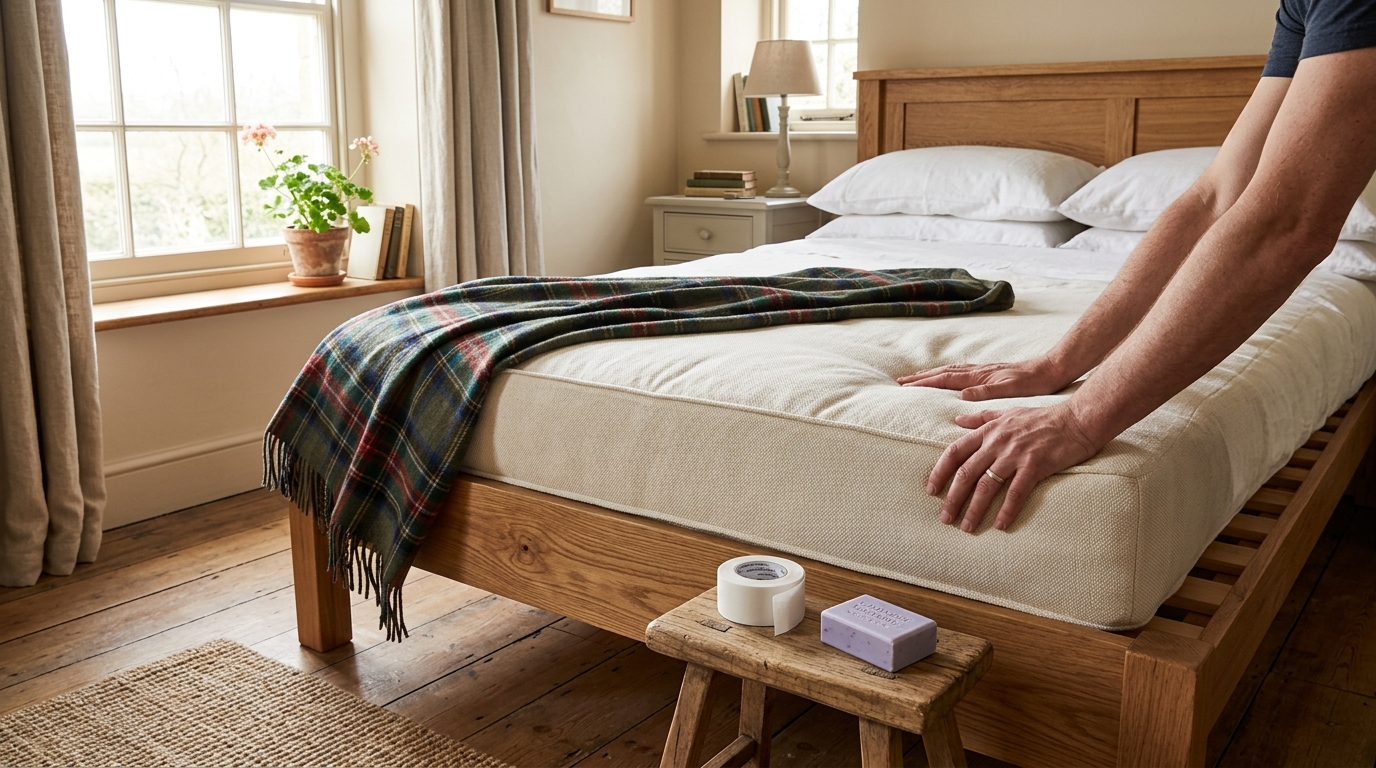
You roll over, the bed gives a sudden squeak, and your partner shoots up like it’s a fire alarm. It is not just annoying—it is a massive stressor, especially if you are renting and terrified the landlord will blame you for a broken bed. But most squeaks are not a sign your mattress is collapsing. They are usually just friction in the frame, the slats, or the floorboards underneath. Here is how to find the noise and shut it up without drilling holes or spending a fortune.
Is It the Mattress or the Base?
To find the source, have your partner lie perfectly still while you give the mattress a gentle push. If the noise stops, the frame is the problem; if it keeps squeaking, the mattress springs are to blame. In most British homes, the culprit is actually the frame—specifically loose wooden slats rubbing against the side rails, or metal joints that need tightening. If the mattress itself is making a metallic squeal, the internal coil springs are rubbing together, which usually means the mattress is reaching the end of its lifespan.
If you want to be completely sure, try these two checks:
- The Wiggle Test: Grab each wooden slat and give it a shake. Loose slats will move and often make a high‑pitched creak against the frame.
- The Spring Test: Press down hard on the centre of the mattress. A grinding or pinging sound means the internal coils are rubbing against each other or tearing through the fabric pockets.
That if the noise stops when your partner stays still, you are almost certainly dealing with a squeaky bed frame, not a broken mattress.
The “No Drilling” Fix (Best for Renters)
Renters cannot exactly go full carpenter on a furnished flat, but a few cheap, non‑permanent tricks can hush a noisy bed in minutes.
- Silicone tape: Wrap a strip of self‑adhesive silicone tape around every joint where the frame meets the legs or side rails. It is invisible, removable, and a lifesaver in student housing. One roll will usually sort a stubborn squeak instantly.
- Felt pads: Stick thick felt pads (about 10mm) between the slats and the frame. The soft surface absorbs the vibration. They are cheap, stick easily to clean wood, and come off without leaving a sticky mess behind.
- Wax or soap: Rub a bar of plain soap or a candle onto any squeaky metal joint. The thin film works as a temporary lubricant and will not damage the landlord’s cheap paint job.
Silicone tape is the gold standard here. It is belt-and-braces safe and leaves zero residue when you eventually move out.
The Structural Fix (Best for Homeowners)
If you own the place, you can go a step further and make the fix permanent.
- Tighten every screw: Over time, central heating dries out wood, causing it to contract and screws to loosen. Give each bolt a firm turn with a screwdriver, but do not over‑tighten or you will split the timber.
- Replace warped slats: Older Victorian homes often have beds with slats that have bowed or split. Swapping them out with fresh pine slats from a local DIY store restores a solid, quiet platform.
- Deal with floorboard resonance: Many UK homes sit on suspended timber floors. A squeaky bed can amplify the creak straight through the boards. Laying a heavy rubber mat or a thick rug under the bed legs absorbs the impact before it hits the floor.
When to Replace Your Bed
Sometimes a DIY fix just is not enough. If you spot broken springs poking through the fabric, or the frame is rotten or severely warped, patching will not help. A heavy clunking sound rather than a light squeak usually means the internal coil system has failed.
According to The Sleep Charity , a mattress that makes suspicious noises or shows obvious signs of wear is likely disrupting your sleep quality and needs replacing. When you do buy a new one, look for pocket springs or foam, which offer better motion isolation. You can browse our mattress guides on the blog to find something that will not wake the whole house every time you shift your weight.
Quick Answers
Will WD‑40 stop a bed from squeaking?
No. Standard WD‑40 is a water-displacement solvent that dries out quickly, leaving the metal joint even noisier than before. If you need to lubricate metal bed parts, use a proper silicone lubricant, or stick to plain soap or candle wax for a lasting fix.
Is a squeaky bed bad for my health?
Not directly, but it ruins your sleep quality by pulling you out of deep sleep every time you or your partner moves. If the squeak is caused by a broken frame, it can also lead to a sagging mattress, which will absolutely do a number on your back over time.
Can I put a rug under my bed to stop the noise?
Yes. A thick rug or rubber furniture cups will isolate the bed from the floor. This stops the floorboard resonance that is incredibly common in older UK terraces with suspended timber floors.
Can my landlord charge me for a squeaky bed?
If the bed was provided with the tenancy and is just squeaking from normal wear and tear, that is the landlord’s responsibility to maintain. However, if you have broken the slats by jumping on it, they might try to claim the repair from your deposit. If you are unsure where you stand, Citizens Advice has clear guidance on what counts as normal wear and tear in furnished rentals.
Bed Noise Diagnosis
| Test | What to Do | Result Interpretation |
|---|---|---|
| Partner Test | Partner stays still while you push the mattress | Noise stops = Frame problem |
| Wiggle Test | Shake each wooden slat | High-pitched creak = Loose slat |
| Spring Test | Press hard on the mattress centre | Grinding sound = Internal coil failure |
| Floorboard Check | Listen for resonance through floorboards | Squeak amplifies = Floor resonance |
| Visual Check | Inspect for broken springs or rot | Visible damage = Needs replacement |
Your Next Step
You now have a clear roadmap: identify whether the squeak comes from the mattress or the base, try a renter‑friendly fix with silicone tape or felt pads, or, if you own the property, tighten screws, replace slats and dampen floorboard vibration. Most of the time one of these steps will sort the problem without you having to splurge on a new bed.
If you’ve walked through the checklist and still feel unsure about any part of your bedroom setup, feel free to get in touch and ask. Otherwise, the next logical step is to take a broader look at your sleep habits. Our free resource pulls together everything you need to audit your room, from lighting to temperature to mattress choice.
Get the Free Sleep Better Checklist and make sure the rest of your sleep environment is as quiet as your newly silenced bed.
Related Guides
For a complete overview, see our Why Is My Mattress Sagging in the Middle? .
Where We Learned This
- The Sleep Charity
- Citizens Advice
- Royal Society for the Prevention of Accidents (RoSPA)
Note: General guidance only. Verify current details with a qualified professional or official source.