Why Do My Hands Go Numb When I Sleep?

Woke up at 3 am, shaking your hand like a maraca and wondering if you’ve just had a mini-stroke? That dead, pins-and-needles feeling is enough to trigger a middle-of-the-night panic, but most of the time it is just your bed playing tricks on your nerves. Many side-sleepers report this exact problem — a sofa-bed in a cramped Manchester flat, right arm going entirely dead after a few weeks. The good news is that it is almost always a fixable bedroom-engineer problem, not a medical emergency.
Why Do My Hands Go Numb When I Sleep?
Your hands go numb when you sleep because prolonged pressure on your wrist or elbow compresses the median or ulnar nerves, cutting off blood flow and nerve signals. Adjusting your pillow height, arm position, and mattress firmness removes that pressure and restores normal sensation.
The tingling you feel is called paresthesia. Imagine sitting on your hand for eight hours; the nerves get squashed, signals stop, and you wake up with a dead limb. Two main nerves usually take the hit while you snooze:
- Carpal Tunnel: The median nerve runs through the wrist. If the wrist is bent too much, the tunnel narrows and the nerve gets compressed.
- Cubital Tunnel: The ulnar nerve threads the elbow’s “funny bone” groove. Bending the elbow sharply for long periods does the exact same thing.
Most guides stop at the wrist, but the elbow is a massive blind spot. As the NHS explains , carpal tunnel symptoms include numbness and tingling in the thumb, index, and middle fingers. Meanwhile, cubital tunnel syndrome often shows up as numbness in the ring and little fingers, especially after the arm has been tucked under a pillow.
The “Cubital Tunnel” Fix (The Most Missed Cause)
Most of us blame the wrist, but the elbow can be the real villain. Weeks of wrist splints will not help if the elbow is digging into the mattress while the arm is bent at a right angle under the head.
What is happening? The ulnar nerve slides through a narrow channel behind the elbow. When you curl your arm tightly or rest it under the pillow, the channel collapses, squeezing the nerve. The result is that classic funny bone numbness spreading down the forearm.
The fix: Keep your elbows straight or only slightly bent. If you like hugging a pillow, try a thinner, flatter one or place a small rolled towel under the elbow to keep the joint from sinking into the mattress. On a massive, bulky pillow, the simple towel prop can clear the numbness within a single night.
If you are sleeping on a sofa-bed or an older mattress, a quick tip is to prop the back of the sofa with a firm cushion. This stops the sleeping surface from caving in around your elbow and creating a pressure point.
Pillow Height Mechanics: The Wrist Alignment Test
Your pillow does more than prop your neck up—it sets the angle of your entire arm. The rule of thumb is the straight line: when you lie on your side, your wrist should line up with your forearm, not bend up or down.
- Too high a pillow forces the wrist into flexion (bending upward), tightening the carpal tunnel.
- Too low a pillow pushes the wrist into extension (bending downward), irritating the median nerve.
How to check: Lie on your side and let your arm rest naturally. Look at your wrist. If you see a noticeable angle, your pillow height is off. A quick fix is to slip a rolled-up towel under the wrist if the pillow is too lofty, or add a thin pillow topper if it is too flat.
Swap a plush pillow for a firmer one and the wrist is more likely to stay neutral all night — no more morning numbness.
Mattress Firmness and Shoulder Sinkage
A soft mattress can be an absolute nightmare for side sleepers. When the shoulder plunges into the surface, the whole arm gets pulled out of its natural line, twisting the elbow and wrist. This shoulder dip creates a cascade of nerve compression that shows up as numb hands.
What to look for: If you can see a visible indentation where your shoulder sits after a night’s sleep, your mattress is probably too soft. A firmer surface keeps the shoulder level with the mattress, preserving the straight-line arm posture.
A £250 foam mattress can turn into a sag-zone after a few months, and every night you wake with a dead hand. Upgrading to a medium-firm hybrid (roughly £600) often sorts it in a week. For those not ready to throw money at it, a mattress topper adding a few centimetres of support can be a decent belt-and-braces solution.
When to See a Doctor (Red Flags)
Most numbness will clear up once you tweak your sleep setup, but keep an eye out for these warning signs:
- Numbness that lingers for more than 30 minutes after you have changed position.
- Muscle weakness where you cannot make a fist or grip a mug.
- Symptoms that appear during the day, not just at night.
- Both hands going numb simultaneously, especially with other odd sensations.
If any of these pop up, book a GP appointment or check NHS 111 for guidance. It is not just a bit of a faff—it could be something beyond simple compression, like a nerve disorder. Remember, the advice here is about bedroom ergonomics, not a medical diagnosis.
Frequently Asked Questions
Why do my hands go numb only on one side?
It is almost always mechanical. You are probably sleeping on that side with the arm tucked under the pillow or the elbow bent into the mattress, which compresses the nerve on that side alone. If both hands go numb, it could be a circulation issue or something systemic, so getting a doctor to look at it is worth your while.
Is sleeping with a wrist splint a good idea?
Yes, a basic splint keeps the wrist in a neutral position and stops it from bending while you snooze. It works well for carpal tunnel symptoms, especially when paired with the right pillow height.
Can a bad mattress cause hand numbness?
Definitely. A mattress that is too soft lets your shoulder sink, pulling the whole arm out of alignment and twisting the wrist and elbow. That misalignment compresses the median or ulnar nerves, leading to that dead-hand feeling first thing in the morning.
Sleep Setup Checklist
| Issue | Symptom | Fix |
|---|---|---|
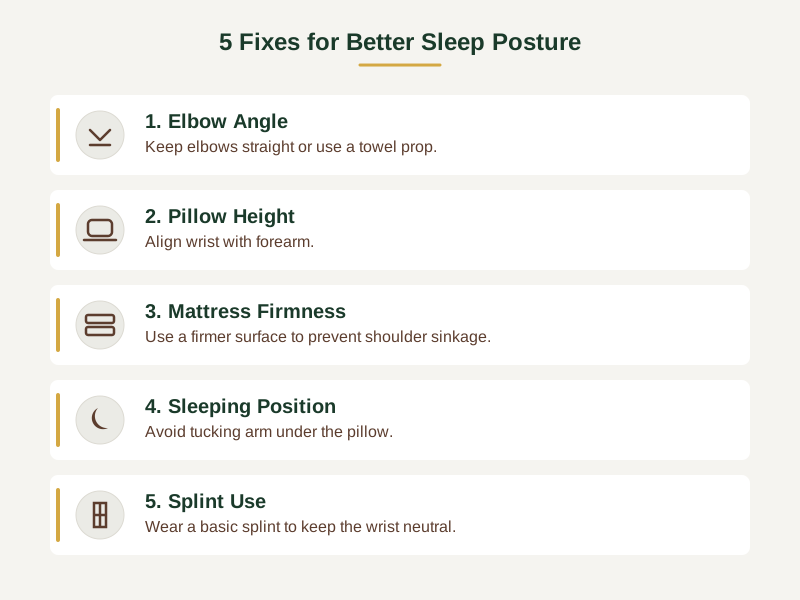
| Elbow Angle | Numbness in ring/little fingers | Keep elbows straight or use a rolled towel under the elbow |
| Pillow Height | Wrist bent up or down | Ensure wrist aligns with forearm; adjust with a topper or towel |
| Mattress Firmness | Shoulder sinkage | Use a firmer mattress or add a supportive topper |
| Sleeping Position | Arm tucked under head | Avoid bending the elbow sharply under the pillow |
| Splint Use | Carpal tunnel symptoms | Wear a basic splint to keep the wrist neutral |
| Red Flags | Numbness lasting >30 mins | Consult a GP or NHS 111 immediately |
Keep Learning
You now know the three bedroom-engineer culprits behind that dreaded morning numbness: elbow angle, pillow height, and mattress firmness. Tidy up those three, and you will be waking up with full, lively hands rather than a dead weight.
If you are ready to audit your whole sleep setup—pillow, mattress, bedroom layout—grab our Free Sleep Better Checklist . It walks you through every quick win, from the right pillow height to the ideal mattress firmness for side sleepers.
Got more questions or need a hand (pun intended) tweaking your bed? Head over to our contact page to drop us a line, or read more about the RestWell team , and we will sort you out. Sleep tight, and may your mornings be feeling-perfect again.
Related Guides
For a complete overview, see our Best Pillow for Neck Pain UK .
Where We Learned This
- NHS (National Health Service)
- NHS 111
- Arthritis Research UK
Note: Content here is general in nature. Prices, products, and guidance change — verify the details before acting.