Why Do I Wake Up with a Headache?
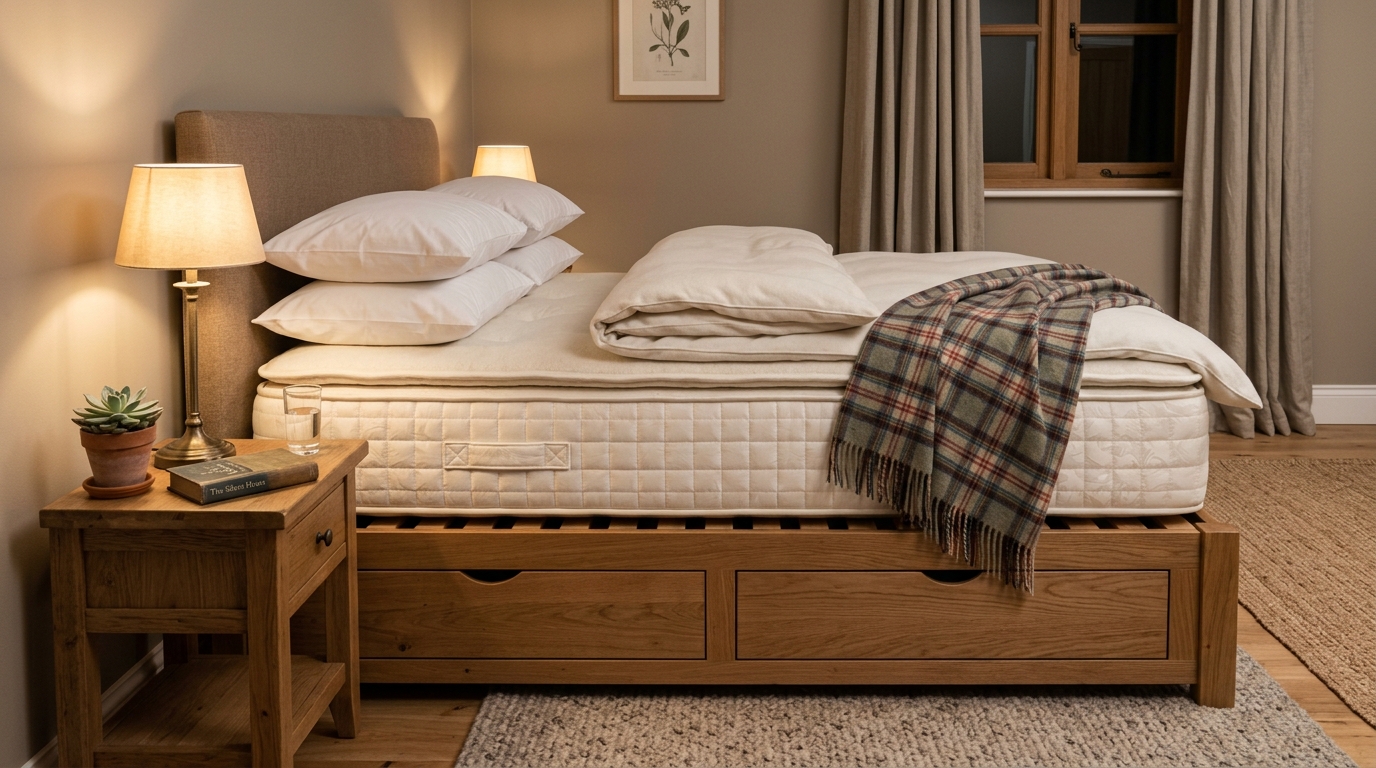
Waking up with a pounding head every morning feels like your brain’s been hit by a train before you’ve even had a cuppa. You’ve probably Googled the worst-case scenarios, but the truth is usually far less dramatic: your bedroom is fighting you. From a mattress that throws your neck out of alignment to a room that drops below freezing while you sleep, your environment is the most common culprit for morning headaches.
The “Sleep Environment Audit” – Your Bedroom Check
Before you book a GP appointment, give your bedroom a once‑over. A hostile sleep environment can trigger the body’s fight‑or‑flight response, tightening muscles and squeezing blood vessels – a classic recipe for a tension headache.
Mini‑checklist (grab a pen and tick as you go):
- Temperature: Is the room freezing when the central heating clicks off? Drafts from single‑glazed windows or thin Victorian walls are common culprits. The NHS recommends keeping rooms you spend time in to at least 18°C to prevent health risks, and dipping way below this at night will easily trigger a headache.
- Noise: Do you hear street traffic, neighbours, or the humming boiler? Even low‑level noise can keep the nervous system on edge.
- Light: Any street‑light spill or LED glow from a phone? Light tells your brain it’s still daytime.
- Air quality: Notice a stale, damp smell? Excess humidity or mould can irritate sinuses and trigger headaches.
A radiator stuck on “off” because nobody has bled it for the winter is a common UK-flat trap. You can wake with a splitting headache that lasts until lunch — the cold is the obvious trigger. A quick audit like this often points straight at the problem, saving you a trip to the doctor.
Can a Bad Mattress Cause Morning Headaches?
Yes, a bad mattress can absolutely cause morning headaches. If your bed is too soft, your spine collapses and forces your neck muscles to work overtime. If it’s too firm, it creates pressure points that pull your neck out of alignment. Both scenarios restrict blood flow and trigger tension headaches by the time your alarm goes off.
The usual pattern: a “luxury” memory-foam mattress rated soft, a side-sleeper, and a king in a cramped UK bedroom. The extra width lets the middle sag, the neck loses support, and you wake with a stiff neck and a throbbing head. That is a construction/size mismatch, not a mystery illness.
Soft vs. Firm – Which Triggers Which Headache?
| Mattress type | Typical effect on the neck | Likely headache |
|---|---|---|
| Very soft (e.g., plush foam) | Spine sinks, neck bends forward | Tension‑type headache |
| Very firm (e.g., hard spring) | Pressure points, limited micro‑movement | Vascular‑type headache (blood flow restriction) |
| Medium‑firm (balanced support) | Maintains natural curvature | Usually headache‑free |
In UK homes, double and king sizes are a bit smaller than their US counterparts, so a mattress that feels “just right” in a showroom can feel too soft once you share it with a partner. If you’re waking up with a headache after a night on a new bed, the first thing to test is whether the mattress sags in the centre – a simple hand‑press will reveal it.
Fix: If the mattress is sagging, a supportive topper (roughly £80‑£120) can add firmness without the cost of a whole new bed. If it’s rock‑hard, consider a mattress protector with a thin memory‑foam layer – it adds a bit of give and usually costs around £30.
Worth knowing: A folded bath towel under your pillow can instantly raise the height and correct alignment without spending money on a new pillow.
The Pillow Height Guide (Ergonomics)
Your pillow is the missing link between a good mattress and a good morning. The “Chin Tuck” test is a quick way to see if you’re off‑kilter: lie on your side and try to tuck your chin to your chest. If you can do it easily, the pillow is too low; if your neck bends back sharply, it’s too high.
Budget fix: Fold a clean bath towel and slip it under the pillow to raise it a few centimetres. It’s not a long‑term solution, but it lets you feel the difference instantly without spending £70 on a premium pillow.
A memory-foam pillow that promises “perfect alignment” can still leave the neck bent forward all night, and the next morning the head throbs. A folded towel often does the trick until you swap to a slightly higher, latex-filled pillow that costs about £55 — a decent price for something that actually supports the neck.
The correct pillow height aligns the head with the spine, keeping the cervical vertebrae in a neutral position. For side sleepers, the pillow should fill the gap between shoulder and ear; back sleepers need a thinner profile to avoid hyper‑extension.
Lifestyle Factors: Hydration & Stress
Even the perfect bed can’t fix a dehydrated brain. In the UK winter, we tend to sip hot tea and forget water, leading to mild dehydration that contracts brain tissue and triggers pain. A glass of water before bed (not too much, or you’ll wake up for the loo) can make a noticeable difference.
Stress is another silent headache driver. Worrying about sleep itself creates a feedback loop: the more you think about the pain, the tighter your neck muscles become, and the worse the headache. Simple stress‑busting habits – a five‑minute breathing exercise or a short journal entry about the day’s worries – can relax those muscles before you hit the pillow.
Quick tip: Keep a 500 ml bottle on your bedside table and take a few sips if you wake up thirsty during the night. It’s a tiny habit that stops the dehydration‑headache cycle.
Now that you know the main culprits, you’re ready to take action. Get the Free Sleep Better Checklist – it walks you through a full bedroom audit so you won’t miss anything.
How to Check Your Mattress for Sagging
If you suspect your mattress is the root of your headaches, don’t just guess. Test it properly.
Step 1: Strip the bed Take off all the sheets, protectors, and toppers so you are looking at the bare mattress surface.
Step 2: The broom handle test Lay a straight broom handle, a long spirit level, or even a tight piece of string horizontally across the middle of the bed where your hips usually rest.
Step 3: Measure the gap Look at the space between the mattress surface and the straight edge. If there is a dip deeper than a couple of centimetres that doesn’t bounce back when empty, the mattress structure is failing and likely pulling your neck out of alignment.
When to See a Doctor
Most morning headaches aren’t life‑threatening, but you should still be vigilant. Call NHS 111 or see a GP straight away if you experience any of the following:
- Sudden, severe pain that peaks within minutes
- Vision changes, confusion, or weakness
- Headache accompanied by fever, neck stiffness, or vomiting
If you’ve tried adjusting your mattress, pillow, temperature, and hydration for a couple of weeks and the headache persists, it could be a sleep‑related disorder such as sleep apnoea. A professional assessment is the next step.
At a Glance
Can a bad mattress cause migraines?
Yes. A mattress that fails to support your spine can provoke cervicogenic headaches – pain that starts in the neck and radiates upward, often triggering or mimicking a migraine. Fixing a sagging or overly firm surface takes the strain off your neck and often eases the symptoms.
Why do I get a headache every morning?
The usual suspects are poor sleep posture from an unsupportive bed, dehydration, a cold or noisy bedroom, and sometimes underlying conditions like sleep apnoea. Start with a basic bedroom audit and the pillow test before assuming it’s something serious.
Is it better to sleep on a hard or soft mattress?
It depends entirely on your sleeping position. Side sleepers usually need a softer surface to cushion their hips and shoulders, while back sleepers need a firmer base to keep their spine straight. A medium‑firm mattress is the safest middle ground for most people.
What to Read Next
You’ve now got the three key pieces of the puzzle: a cooler, quieter room; a mattress that supports rather than sags; and a pillow that keeps your neck in line. Tweak one area at a time, and you’ll likely notice the morning throb fading within days. If you’re still struggling after making these changes, feel free to get in touch and let us know what you’re dealing with.
When you’re ready to lock the changes down, grab our Free Sleep Better Checklist – it gives you a printable, step‑by‑step guide to audit your bedroom, spot hidden issues, and keep your sleep space in top shape.
Sleep should be a sanctuary, not a source of pain. With a few practical tweaks you can wake up feeling refreshed instead of reaching for the painkillers. Here’s to mornings that start with a smile, not a headache.
Related Guides
For a complete overview, see our Best Pillow for Neck Pain UK .
Sources
Note: This article is for informational purposes. Always check with a qualified professional for advice specific to your situation.