Memory Foam vs Pocket Sprung: Which Mattress is Best for UK Homes?
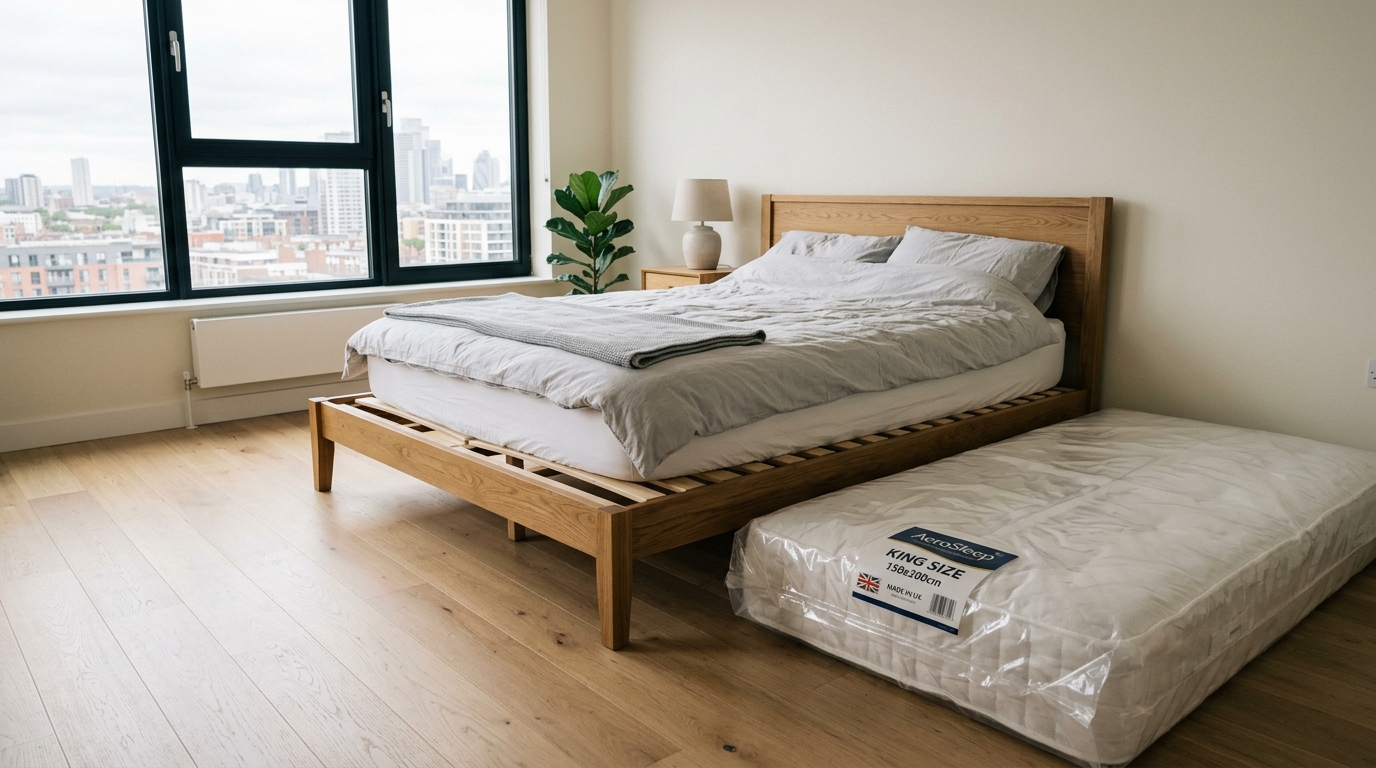
Choosing between memory foam and pocket sprung usually comes down to how much you hate sweating at night and whether your landlord actually provided a bed frame. Owners consistently report cheap memory foam turns a tiny London bedroom into a sauna, and pocket-sprung units that creak louder than Victorian floorboards. If you are trying to figure out which one actually survives a damp British winter, dry central heating, and the occasional stint on the floorboards, here is exactly what you need to know.
The “Floor Test”: Performance on the Ground
If you’ve ever tried to stash a mattress on the floor because the landlord won’t let you use a bed base, you’ll know it’s not just a bit of a faff – it changes how the whole thing feels.
Pocket‑sprung on the floor: The individual coils act like tiny, self‑contained supports. Even without a slatted base they stay firm, giving your spine a solid platform. If you have to park the mattress on the floor for a week while a frame arrives, pocket-sprung is the construction that still behaves like a bed rather than a cushion.
Memory foam on the floor: Foam loves to sink. On bare floorboards it can feel like lying on a wet sponge, especially when the room’s a few degrees above freezing. In a damp winter the foam can pull moisture from the boards and feel clammy against the skin. The cheap “hammock effect” means the centre gives way, forcing your hips to drop and straining the lumbar region.
If you’re likely to keep the mattress on the floor, pocket‑sprung is the safer bet. For a proper bed frame, both can work, but the floor test alone is a quick way to weed out the foam that does its own version of a damp‑room horror show.
Comfort & Support: The Body‑Type Match
Pocket‑sprung – the “Cradle Effect”
Pocket springs react to each bit of your weight individually. If you’re a back sleeper or tip the scales over 80 kg, the springs push back just enough to keep your spine in a neutral curve. Official NHS advice on back pain points out that a mattress needs to properly support your body to help recovery, which is exactly why the firm push-back of a pocket-sprung unit works so well. Swap an old foam bed for a pocket‑sprung top and back pain often eases because the springs give that firm, supportive feel without the “bottom‑out” sensation.
Memory foam – the “Pressure‑Relief” hug
Foam moulds to the shape of your body, spreading pressure across a larger area. Side sleepers love it because it cushions the hips and shoulders. The downside? Light‑weight folks can sink too deep, especially with low‑density foam you’ll find in budget beds. Over time, a cheap foam mattress can sink into a permanent dent in the centre – a classic cheap‑foam trap.
Here is a quick breakdown of how the two materials handle different body types:
| Body type / weight | Pocket‑sprung | Memory foam |
|---|---|---|
| Back sleeper, >80 kg | Spot on – firm support, spinal alignment | May feel too soft, risk of sagging |
| Side sleeper, <70 kg | Can feel too firm, less contouring | Excellent pressure relief, “hug” feel |
| Mixed sleeper, average weight | Good all‑round, especially with a comfort layer | Works if density is medium‑high; cheap foam warns |
If you’re on the fence, a hybrid (springs + a thin foam layer) often gives the best of both worlds.
Temperature Regulation: The UK Climate Factor
British summers can feel like a sauna when the heating is on, and winters are notorious for that lingering damp that makes any surface feel chilly. Here’s how the two techs stack up.
Pocket‑sprung: The coils create natural airflow. Air moves between them, carrying heat away from your body. Even in a room that’s 24 °C, a pocket‑sprung mattress stays relatively cool. Even with the windows shut through a heatwave, you should barely sweat on a decent pocket‑sprung.
Memory foam: Foam is an insulator. It traps body heat, and when the room temperature climbs, you can feel like you’re stuck to the mattress. In the damp months, the same foam can feel cold and clammy against the sheets – a double whammy. A cheap foam topper on a cheap bed often means the first night you are drenched in sweat, and the second night you wake up shivering.
A hybrid compromise—a pocket‑sprung core with a thin, breathable foam layer—gives decent airflow while still offering some contouring. If you’re a hot sleeper, look for foams marketed as “gel‑infused” or “open‑cell” – they’re not magic, but they do help a bit.
Motion Isolation: Sleeping Next to a Partner
You’ve probably heard that foam wins on motion isolation, but there’s a nuance most guides miss.
Pocket‑sprung: Because each coil sits in its own fabric pocket, movement on one side hardly travels to the other. In a narrow London studio where the bed is right up against the wall, that isolation is the difference between one person getting up and both people waking.
Memory foam: It’s excellent at dampening motion – you can roll over, get up, and the other side stays still. The catch is cheap foam’s “hammock effect”: the body sinks deep, and the mattress can sag, meaning the partner feels a subtle shift when you shift weight. A decent density foam avoids this, but you have to check the specs.
For couples in tight spaces, pocket‑sprung gives reliable isolation without the risk of a sagging dip, while quality memory foam can be just as good if you avoid the cheap variants.
Durability & Maintenance: Longevity in the UK
Mattresses are a long‑term investment, and the British climate throws a few curveballs.
Pocket‑sprung durability: The springs retain their bounce for years. Flip‑compatible models let you even out wear, and the metal framework is easy to vacuum. Some owners report having a pocket‑sprung for five years with the only wear being the fabric cover. Consumer champions at Which? regularly note that pocket‑sprung units typically outlast foam by a good margin when it comes to keeping their shape.
Memory foam wear: Foam gradually develops body impressions. After 18–24 months, you’ll notice a permanent dip where you usually sleep. Stains are another pain – foam absorbs liquids, and the “new foam” smell (off‑gassing) can linger for days, especially in a poorly ventilated flat. In damp rooms, the foam can even develop a slight mildew smell if not aired out.
Spot‑clean spills immediately with a mild detergent, then let the mattress air dry. For pocket‑sprung, a quick vacuum on a low setting removes dust that can aggravate allergies. Adding a breathable, waterproof mattress protector (worth the investment for about £30–£50) saves both types from grime and spills.
How to Look After Your Mattress in a Damp UK Flat
If you live in an older property or a flat prone to condensation, taking care of your mattress requires a bit more than just changing the sheets.
Air it out daily Throw the duvet all the way back to the foot of the bed for 20 minutes every morning. This lets the sweat from the night evaporate, which is especially important for foam mattresses that trap moisture.
Use a breathable protector Spend a little extra on a decent cotton or bamboo waterproof protector. It stops sweat getting into the foam or rusting the springs, without giving you that awful plastic-bag rustling sound when you roll over.
Rotate it regularly Most modern memory foam mattresses are single-sided so you cannot flip them. Rotate them head-to-toe every month for the first six months to stop body dips forming right in the middle.
Keep it off the floor if possible If you have to put it on the floor, lift it up against a wall once a week. Floorboards in old terraces get cold, and the temperature difference causes condensation right under where you sleep, which leads straight to mould.
Which Mattress Should You Buy: Pocket Sprung or Memory Foam?
You should buy a pocket-sprung mattress if you sleep hot, weigh over 80kg, or need to keep the bed on the floor. You should buy memory foam if you are a side sleeper who wants pressure relief and you have a well-ventilated room with a proper bed frame.
Pocket‑sprung is the go‑to if you:
- Sleep on your back or are a heavier sleeper.
- Live in a damp flat or keep the mattress on the floor.
- Are a hot sleeper who can’t stand a night of sweating.
- Want a mattress that will keep its bounce for years without a lot of fuss.
Memory foam fits you if you:
- Prefer side‑sleeping and need that “hug” feeling.
- Value top‑notch motion isolation and have a lighter frame.
- Have a proper bed base and a well‑ventilated bedroom (to avoid the clammy effect).
Hybrid – the compromise most UK homes end up choosing. It gives the airflow of springs with a thin, breathable foam layer for pressure relief. If you’re still on the fence, grab our free checklist to see which combination matches your bedroom size, climate, and sleep style.
You now have the full picture – Get the Free Sleep Better Checklist .
Quick Answers
Which is better for back pain?
Pocket‑sprung mattresses generally win for back pain because the individual coils keep the spine aligned and provide firm, consistent support. Memory foam can work if it’s a high‑density model, but cheap foam often lets the lower back sink too far, creating a dip that hurts.
Do memory foam mattresses smell?
Yes, new memory foam often releases a chemical odour – the infamous “new foam smell”. It usually fades after a few days of airing the mattress out in a well‑ventilated room. If you’re sensitive, give it a weekend of fresh air before you start sleeping on it.
Can I put a memory foam mattress on the floor?
You can, but expect it to feel colder and less supportive than on a slatted base. In damp UK weather the foam may absorb moisture from the floorboards, leaving it a bit clammy. If you must store it on the floor, add a breathable protector and rotate it regularly.
Which is better for a small bedroom?
Pocket‑sprung mattresses tend to be more breathable, so they won’t heat up the whole room – a plus in a tiny flat where the bedroom doubles as a living space. Memory foam can feel cosy, but it may make the room feel warmer, which isn’t ideal in a cramped, poorly ventilated space.
Mattress Match-Up by Body Type
| Body Type / Weight | Pocket-Sprung | Memory Foam |
|---|---|---|
| Back sleeper, >80kg | Firm support, spinal alignment | May feel too soft, risk of sagging |
| Side sleeper, <70kg | Can feel too firm, less contouring | Excellent pressure relief, hug feel |
| Mixed sleeper, average weight | Good all-round, especially with comfort layer | Works if density is medium-high |
| Hot sleeper | Natural airflow, stays cool | Traps heat, can feel clammy in damp weather |
Before You Buy
You’ve seen how pocket‑sprung and memory foam stack up against the very real constraints of UK flats – damp floors, limited space, noisy neighbours, and those summer nights when the heating refuses to shut off. The key is matching the mattress type to your body, your bedroom’s climate, and how you store the bed.
If you’re ready to make a choice, the next logical step is to download our free Sleep Better Checklist. It walks you through the exact questions you need to ask yourself – from weight and sleep position to whether you’ll be keeping the mattress on the floor. It’s a quick, no‑strings‑attached way to cut through the marketing hype and land on a mattress that actually works for you.
Got more questions? Get in touch with us – we’re always happy to help you sort out the right fit for your flat. You can also read more mattress troubleshooting advice on the blog , or find out more about RestWell UK here . Sleep well, stay warm (or cool), and enjoy a night without the usual back‑pain‑does‑the‑floor‑creak routine.
Related Guides
For a complete overview, see our Best Mattress for Side Sleepers UK .
Where We Learned This
- NHS (National Health Service)
- Which?
- Sleep Council
Note: This article is for informational purposes. Always check with a qualified professional for advice specific to your situation.