How to Sleep Better in a Noisy Flat (Without Moving Out)

You’ve already tried the classic tricks – earplugs, a desk fan, a pillow clamped over your head – but the neighbour’s late-night footsteps still jolt you awake. Many renters have been there—a side-sleeping sofa-bed in a cramped Manchester flat can leave your right arm going entirely dead after a few weeks.
What Noise Problems Must Your Landlord Legally Fix?
Under Section 11 of the Landlord and Tenant Act 1985 , your landlord is only legally required to fix noise issues caused by structural defects. That means they must repair cracked walls, loose plaster, or broken windows that let sound travel, but they are not responsible for your neighbour’s heavy slippers or loud TV.
If the noise is coming through a genuine building defect – say, a missing insulation batten – you can ask the landlord to sort it. If they refuse, you have a legal route via Citizens Advice . What falls on your side of the tenancy agreement is anything you can add, remove or hang without altering the fabric of the building. Think curtains, rugs, door seals, and temporary acoustic panels. You can’t glue foam to the walls (most leases will call that a breach), but you can lean a freestanding screen or hang a blanket.
Here is a quick breakdown to keep you from crossing that line:
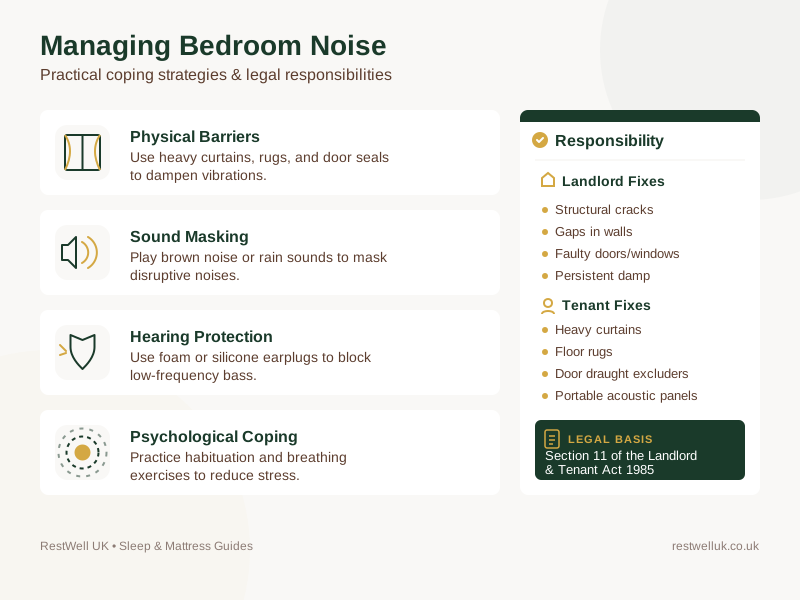
- Landlord Fixes: Structural cracks, gaps in walls or ceilings, faulty doors or windows that are part of the building’s envelope, and persistent damp that compromises sound insulation.
- Tenant Fixes: Heavy curtains, floor rugs, door draught excluders, portable acoustic panels, white or brown noise generators, and earplugs.
If you decide to report a nuisance to the council under the Environmental Protection Act 1990 , be aware that making a formal complaint can sometimes sour neighbourly relations. Approach the conversation calmly first, and keep a written record of the disturbances – that’s the safest way to avoid retaliation.
Physical Barriers: The “Hard” Fixes (Without the Hammer)
A wall that transmits a TV bass line can be turned into a modest sound-shield with a few cheap, non-permanent tweaks. Foam earplugs alone will not fix a leaking room; treat the fabric of the bedroom first.
- Curtains: Look for “acoustic-grade” or “thermal-plus” curtains that are at least 200 g/m². Hang them a few centimetres beyond the window frame; the extra overlap creates a pocket of air that dampens vibrations. If you can’t drill, use tension rods – they’re a bit of a faff but save you a landlord’s wrath.
- Flooring: A chunky rug (think 10 mm pile, 3-4 kg per square metre) under the bed does more than warm the floor; it absorbs impact noise from upstairs. A 2 m × 3 m Persian-style rug in a studio flat can drop upstairs dance steps from a heavy thump to a barely perceptible thud.
- Doors: Most flat doors sit on a simple hollow core that lets sound leak around the frame. A rubber draught excluder strips the gap at the bottom, and a thick curtain hung over the door adds an extra barrier. It’s belt and braces, but the cumulative effect is noticeable.
Imagine your bedroom as a cave: the curtains are the stone walls, the rug is the earth covering the floor, and the door curtain is the narrow entrance you can control. It’s not a full-proof bunker, but it shifts the environment from an echo chamber to a quiet nook. You can find more practical bedroom setup tips over on our blog .
Now you’ve got the room physically quieter, you’re ready for the next step – masking what still gets through.
The “Sound Masking” Strategy: Brown Noise & White Noise
If you’ve ever tried a white-noise app on a cheap phone speaker, you know the hiss can feel like a constant static that’s just as irritating as the neighbour’s TV. Not all noise is created equal. White noise is a flat spectrum of high-frequency hiss; brown noise rolls deeper, resembling a low-frequency rumble or heavy rain. In a typical UK flat, footsteps and TV dialogue sit in the mid-to-low range, so brown noise does a better job of drowning them out.
A quick test: play a brown-noise track at about 45 dB – roughly the same level as a quiet library – and you’ll notice the upstairs chatter fades into the background. If you prefer a free option, the BBC Radio 4 “Nightly Podcast” has a 30-minute rain loop that’s essentially brown noise and streams directly from the BBC website.
A simple Amazon Echo Dot set to “rain” is a cheap masking option – the device’s speaker is modest, but the low-frequency rumble is enough to mask most domestic sounds. Just keep the volume low enough not to disturb your partner; the goal is to replace the unpredictable footfall with a consistent, soothing hum.
Product Solutions: The Best Earplugs for UK Flat Dwellers
When you can’t block the noise at the source, earplugs become the last line of defence. Here is what actually works when you’re desperate for sleep.
- Best Overall (Comfort): Soft foam plugs, like the generic “Hearos” set, expand to fill the ear canal without pressing on the outer ear. They’re cheap (around £5 for a 200-pair box) and work well for side sleepers because they stay put even when you roll onto your side. The downside? They can slip out if you toss and turn a lot, so keep a spare handy on the bedside table.
- Best for Blocking Bass: Silicone or wax plugs, such as the “Mack’s Pillow Soft” silicone pair, create a tighter seal that stops low-frequency thumps from travelling down the ear canal. They feel a bit bulkier, and you’ll need a few minutes each night to mould them, but the reduction in bass is noticeable – enough to drown out a neighbour’s late-night TV.
- Budget Alternative: Reusable silicone plugs from a local pharmacy cost roughly £8 for a pack of three. They’re not as soft as the foam, but they last years if you clean them properly. The only gripe is the initial “mould-in-your-ear” sensation, which fades after a night or two.
A quick comparison in practice: against an upstairs party playlist, foam keeps the high-frequency clatter at bay, but the low bass still sneaks through.
Psychological Coping: Habituation and Misophonia
All the curtains, rugs and earplugs won’t help if your brain stays locked in fight-or-flight mode. The thing is, the brain can learn to ignore background noise – it’s called habituation. It’s not a magic button; it takes a few nights of consistent exposure and a conscious shift in focus.
One approach that works well is the “sleep cue” method: before lights out, spend a minute visualising the feeling of a deep, heavy blanket pulling you down. Then deliberately tune attention to the sensation of the mattress supporting your back, not the sound of the neighbour’s TV. Over a week, the brain starts to treat the noise as just another part of the room’s ambience, and the stress response drops.
Misophonia – the disproportionate anger at specific sounds like chewing or a door slam – can make even a faint footstep feel like an assault. If you recognise that reaction, try a quick breathing exercise: inhale for four seconds, hold for four, exhale for six. It signals the nervous system that you’re safe, even if the noise persists.
That habituation does its work, but you need to give it a chance. Keep a consistent sleep schedule, avoid caffeine after 6 pm, and stick to the physical and acoustic fixes above. Within a fortnight most people notice the brain stops reacting as sharply – it can feel frustrating at first, but it’s worth the patience.
Common Questions
Can I ask my landlord to soundproof the flat?
Only if the noise is coming through a structural defect. If there is a cracked wall or missing insulation, the landlord is legally required to repair it under Section 11 of the Landlord and Tenant Act. Behavioural noise from a neighbour’s TV or footsteps isn’t their responsibility, meaning you’ll need to rely on DIY fixes like heavy curtains and rugs.
Is brown noise better than white noise?
Yes, for masking speech and footfalls. Brown noise has more low-frequency energy, which blends better with the typical sounds that travel through flat walls. White noise is useful for covering high-frequency static, but it can feel harsher and less soothing when you are trying to sleep.
What’s the best earplug for side sleepers?
Soft foam plugs are the most comfortable for side sleepers. They mould gently around the ear without creating pressure points against the pillow and usually stay in place even when you turn onto your side. Just keep a spare pair nearby in case they fall out during the night.
Noise Responsibility Breakdown
| Responsibility | Examples |
|---|---|
| Landlord Fixes | Structural cracks, gaps in walls, faulty doors/windows, persistent damp |
| Tenant Fixes | Heavy curtains, floor rugs, door draught excluders, portable acoustic panels |
| Legal Basis | Section 11 of the Landlord and Tenant Act 1985 |
What to Do Next
You’ve now got a three-step toolkit: know what the landlord must fix, rig up cheap physical barriers, and train your brain to stop reacting to the inevitable creaks. The next logical step is to put those ideas into action – start with a pair of foam earplugs tonight, then add a heavy curtain or rug tomorrow. If you want a quick, printable reference to keep you on track, grab our free Sleep Better Checklist – it even includes a “Noise Checklist” so you can tick off each fix as you go.
Remember, you don’t need to move out to reclaim a decent night’s sleep. A few simple tweaks, a bit of patience, and the right earplugs can turn a noisy flat into a sanctuary. Sweet dreams, and if you hit a snag or just want to vent about your upstairs neighbours, feel free to get in touch .
Related Guides
For a complete overview, see our Best Pillow for Neck Pain UK .
Where We Learned This
- Citizens Advice - Landlord and Tenant Act 1985
- UK Government - Environmental Protection Act 1990
- UK Government - Statutory Nuisances
Note: Content here is general in nature. Prices, products, and guidance change — verify the details before acting.