How to Keep a Bedroom Cool in Summer (Without Air Conditioning)
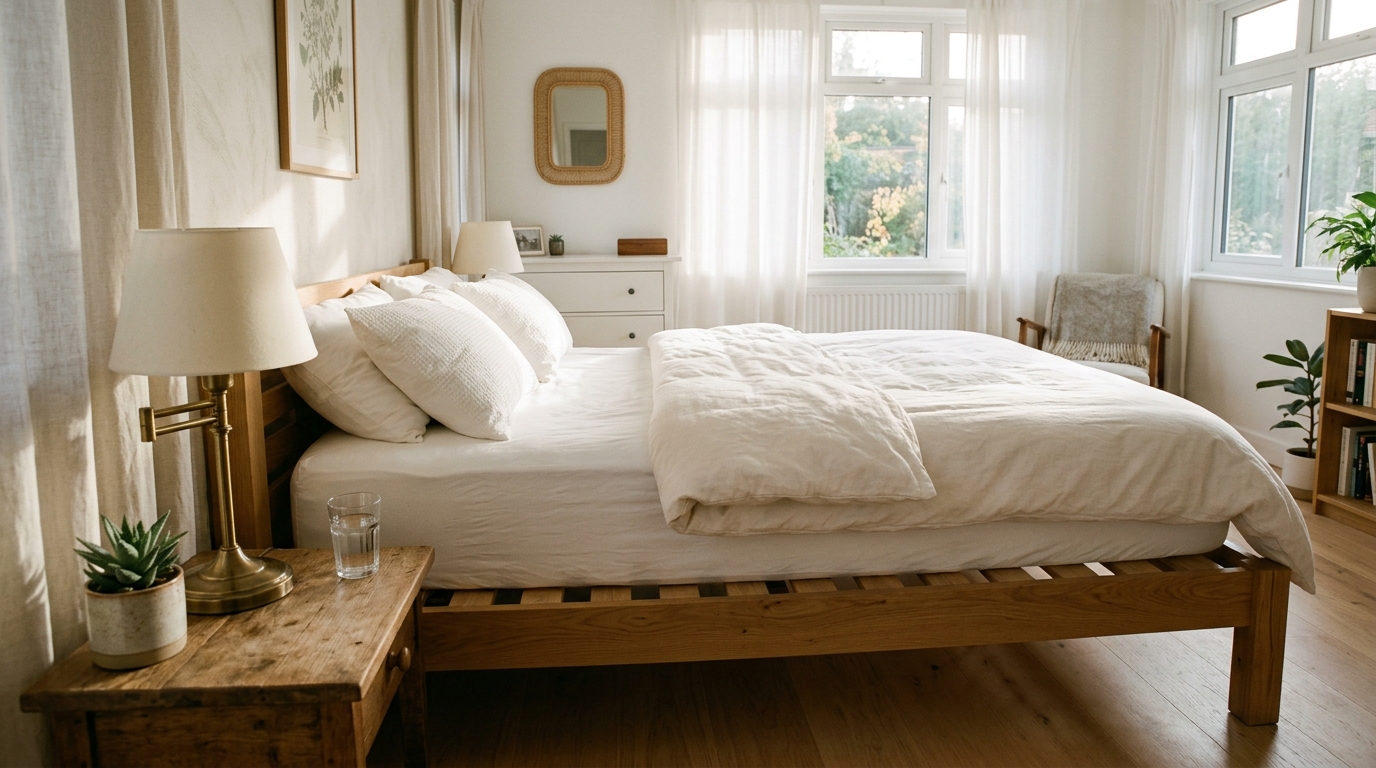
You’re lying in bed at 3 am, drenched in sweat, and the ceiling fan is whirring like a dying wasp. The walls feel like they’re radiating heat straight into your skin. You’ve tried pulling the curtains, cracking the window, even splashing water on the mattress, but nothing sticks. The problem isn’t just the thermostat outside; it’s how your British bedroom stores and releases heat. Here is exactly how to fix it without shelling out for air conditioning.
Why Is My Bedroom So Hot? (The “Golden Hour” Strategy)
Your bedroom gets unbearably hot because solid brick walls and glass windows absorb solar radiation during the late afternoon and release that stored heat into the room long after the sun goes down. Heat gain in a typical Victorian flat doesn’t happen evenly throughout the day. The sun’s low‑angle rays hit west‑facing windows hardest between 3 pm and 5 pm. By the time the sun dips, that trapped heat is baking you, even if the outside temperature has fallen.
The fix: close or shade your windows before the sun gets a chance to charge them up.
- Before 4 pm: pull down blackout or thermal curtains, or slide a reflective blind across the glass.
- 4 pm–6 pm: keep the blinds down, but open a small vent at the top of the window (or a trickle vent if you have one) to let the hot air escape.
- After 6 pm: if the outside temperature is at least 2 °C cooler than inside, open the window wide for a quick purge, then shut it again after 10‑15 minutes.
A quick checklist for a typical weekday:
| Time | Action |
|---|---|
| 07:00–12:00 | Keep curtains drawn if the room gets direct sun; otherwise leave a sliver open for fresh air. |
| 12:00–16:00 | If it’s still warm outside, keep the room sealed and use a fan to circulate internal air. |
| 16:00–18:00 | Close curtains/blinds fully – this is the “Golden Hour” for blocking solar gain. |
| 18:00 onward | Open windows only if the night air is cooler; otherwise keep them shut and run a fan. |
Keep the window open at 6 pm assuming the breeze will cool things down, and you often get the opposite: the sun is still on a single-glazed pane, and the room gets hotter for another hour.
Physical Barriers: Curtains, Blinds, and Insulation
Most renters think any curtain will do, but the material and backing make a world of difference, especially with single‑glazed sash windows that dominate older flats.
- Standard curtains – usually just a fabric layer; they block a little light but let most infrared radiation through.
- Thermal linings – a reflective backing (often aluminium‑coated) that bounces solar heat back out. Consumer group Which? has found that a proper thermal liner cuts heat gain significantly compared with a plain cotton panel.
- Blackout blinds – thick, tightly woven fabrics that block sunlight before it can heat the room’s surfaces. They are a bit pricier, but keeping them closed on the sunny side of the house during peak afternoon hours can noticeably reduce room temperature by stopping solar heat gain at the window rather than letting it radiate inward.
The “thermal bridge” effect is often missed: even the best curtain can’t stop heat leaking around the frame. Sash windows have a wooden or uPVC frame that conducts heat from the glass into the wall. Adding a narrow strip of foil‑backed radiator foil (the cheap kind you find in DIY stores) along the interior edge of the frame can shave off another half‑degree.
A quick comparison:
- Standard cotton curtains: cheap, decent for privacy, ~0 % heat reduction.
- Thermal‑lined curtains: mid‑range (£30‑£60 per panel), decent heat reduction, easy DIY install.
- Blackout blinds: higher (£50‑£100 per set), excellent heat reduction, also block street light – a bonus for early risers.
Thermal liners on sash windows are one of the cheaper ways to knock a couple of degrees off a hot bedroom. The mattress feels less sticky because less heat is pouring through the glass, not because the bed itself changed.
Airflow Engineering: Cross‑Ventilation for UK Bedrooms
If you’ve ever tried to cool a room by pointing a fan at the ceiling, you’ll know it does little more than stir up warm air. The trick is to move the hot air out and pull cooler air in.
The 3‑Phase Draft
- Low‑level intake – open the bottom half of a window (or a door gap) on the side of the room that faces the prevailing breeze. Cool air sinks, so this creates a pressure sink.
- High‑level exhaust – open a window or vent on the opposite wall, preferably higher up, to let the warm air rise and escape.
- Fan‑assist – place a slim floor fan in the intake opening, blowing into the room. The fan creates a gentle pressure boost that pushes the cooler air across the floor and forces the warm air up to the exhaust.
A text‑based diagram:
[Window – low] <-- cool air in (fan) [Bed] --> warm air out (high window)
The common mistake is the opposite – a fan blowing out the only window. The room stays stuffy because the fan is simply recirculating the same warm air. Turn the fan round to pull air in, with a high window cracked open for exhaust.
A couple of practical tips:
- Keep the fan on low: high speed creates turbulence that can actually mix warm and cool layers, reducing the overall effect.
- Use a “window fan” that fits snugly in the frame; it seals the gap and prevents hot air leaking back in.
- If you only have one window, place the fan in the doorway facing outward. It will act as an exhaust, and the slight pressure drop will draw cooler air in through any cracks under the door.
Bedding & Sleepwear: Materials and Layering
Even if you nail the windows and airflow, a mattress that traps heat can still ruin a night’s sleep. Memory foam, for all its contouring benefits, is notorious for the “hot water bottle” effect: it conforms to your body and blocks airflow, so the heat you generate stays right where you are.
Many renters spend years fighting a cheap memory foam block that turns their bed into a furnace every July.
What works:
- Natural fibres – cotton, linen, and bamboo are breathable and wick moisture away. A linen duvet can feel a few degrees cooler than a polyester one, especially when the humidity spikes.
- Hybrid mattresses – a pocket‑spring core with a thin foam top layer lets air circulate. Swapping a decade-old memory foam block for a hybrid is one of the more reliable ways to cut night sweats without changing the whole bedroom.
- Cooling toppers – gel‑infused toppers sound slick, but the gel often just adds another layer that can trap heat if it’s not well ventilated. A breathable latex topper (around £80‑£120) performs better in practice, keeping surface temperature roughly 1°C lower.
Layering strategy
- Base sheet: 100 % cotton percale – tight weave, stays cool.
- Blanket: Light cotton or a thin merino wool throw for those rare chilly nights.
- Duvet: Switch between a lightweight cotton/linen fill and a heavier synthetic one, depending on the forecast.
- Pillow: A breathable foam pillow with a removable, washable cover.
The NHS guidelines on sleep stress that a bedroom temperature around 16 °C–18 °C is optimal. Breathable bedding is the easiest way to get your micro-climate down to that level without trying to refrigerate the entire room.
The “Emergency” Cool‑Down: DIY Methods
Sometimes the room is already baking and you need instant relief. These tricks are cheap, a bit of a faff to set up, but they work fast.
1. Damp‑sheet fan hack
- Grab a clean cotton sheet (the thinner the better).
- Soak it in cold water, wring out excess – it should be damp, not dripping.
- Hang it on a rod or over the back of a door so it hangs in front of a standing fan.
- Turn the fan on low; as air passes through the wet fabric it picks up moisture and cools the airflow.
2. Cold‑water bottle pulse points
Pop a few bottles of chilled water (from the fridge, not the freezer) and place them on pulse points – wrists, inner elbows, and the back of the neck. The cooling effect is subtle but can make you feel a whole degree cooler overall.
3. Ice‑pack pillow trick
Wrap a frozen gel pack in a thin cotton cover and slide it under the pillow for the first hour of sleep. It creates a localised chill that offsets the mattress heat. Just remember to remove it before you roll over, or you’ll end up with a frozen forehead.
Maintenance: Checking for Drafts and Insulation Gaps
Even the best window strategy won’t help if hot air is sneaking in through unnoticed gaps.
- Draft check: On a still night, hold a lit incense stick or a thin candle near window frames, doors, and the base of the wall. If the smoke wavers, you’ve got a leak.
- Seal gaps: Use self‑adhesive foam tape (around £5 per roll) for window frames, and a door sweep for the bedroom door.
- Loft insulation: If your flat is on the top floor, a thin layer of mineral wool rolled into the loft hatch can stop hot air from sinking down into the bedroom.
A gap under the bedroom door is easy to miss, and it can let hot kitchen air drift in every night; a simple rubber door sweep closes it. If you’ve found a better DIY fix for this in your own rental, get in touch and let us know.
Frequently Asked Questions
Is it better to leave the window open or closed during the day?
Keep the window closed if it is hotter outside than inside. Once the outside temperature drops at least 2 °C below your room temperature, open it up to let the cool air in. Opening windows while the sun is beating down just invites hot air into the house.
Do blackout curtains actually keep a room cool?
Yes, they drastically reduce solar radiation, which is the primary cause of heat gain in UK bedrooms. A thick blackout blind stops the sun from heating up the floor and walls, which prevents the room from feeling like an oven later that night.
Why is my memory foam mattress so hot?
Memory foam requires your body heat to soften and mould to your shape, but its dense structure traps that heat right against your skin. Because air cannot easily flow through the foam, you end up sleeping in a pocket of your own trapped body heat.
Should I put a fan in the window?
Only if you are pointing it the right way. Put the fan in the window pointing outwards if you want to exhaust hot air from the room. Place it facing inwards if the air outside is cooler and you want to pull that fresh air in.
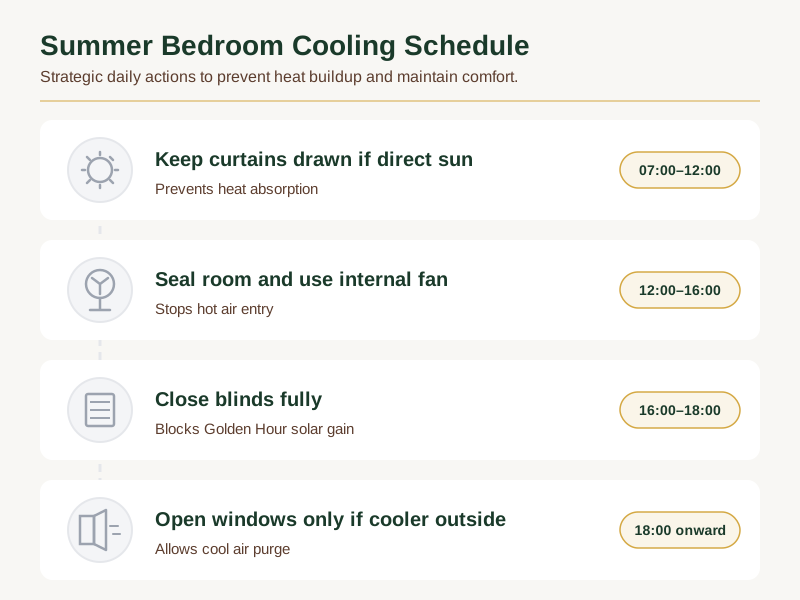
Bedroom Temperature Checklist
| Time of Day | Action | Reason |
|---|---|---|
| 07:00–12:00 | Keep curtains drawn if direct sun | Prevents heat absorption |
| 12:00–16:00 | Seal room and use internal fan | Stops hot air entry |
| 16:00–18:00 | Close blinds fully | Blocks Golden Hour solar gain |
| 18:00 onward | Open windows only if cooler outside | Allows cool air purge |
What to Do Next
You’ve now got the physics of a UK bedroom under your belt: block the sun before it hits, seal the gaps that let heat creep in, move air the right way, and dress your bed in breathable layers. Put these steps together – start with the golden‑hour window routine tonight, slap on a thermal liner, and give the damp‑sheet fan a go if the room’s already warm.
You don’t need a pricey air‑conditioning unit to get a decent night’s sleep; you just need a bit of engineering and a few smart purchases.
Ready to audit your bedroom for hidden heat sources? Get the Free Sleep Better Checklist – it walks you through every nook and cranny, from window frames to mattress materials, so you can spot the culprits and fix them one by one.
Sleep is cheap, but a sweaty night isn’t. With the right tweaks, you’ll be drifting off before the alarm, not staring at the ceiling wondering why you ever thought British summers were “just a bit warm”.
Sweet dreams, and remember: a cool room isn’t a luxury, it’s a basic requirement for good sleep.
Related Guides
For a complete overview, see our Best Pillow for Neck Pain UK .
References
Note: General guidance only. Verify current details with a qualified professional or official source.