How Often Should You Replace Your Mattress? (UK Guide)
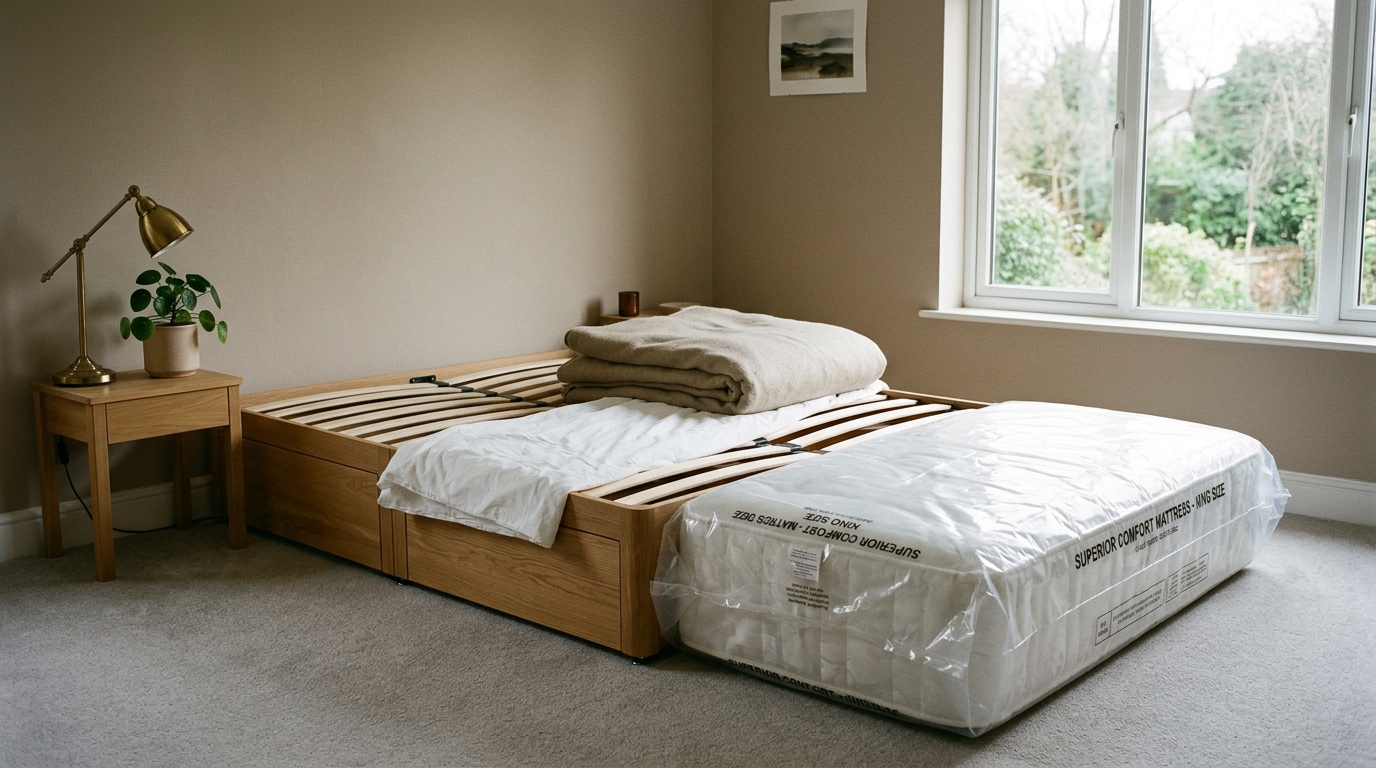
Waking up with a stiff back, a sore neck, and the sneaking suspicion you’re sleeping on a slab of concrete? You’ve probably heard the “seven-year rule” tossed around as if it applies universally to every bed. The reality is, that’s a broad guideline often based on US climates and housing stock, not a damp London terraced flat or a draughty Leeds Victorian basement. A mattress needs swapping when it stops supporting you properly, not just because a calendar says so. Let’s look at the actual signs your bed has given up, how British central heating and humidity play a part, and how to know for sure if it’s time to drag it out to the council collection point.
The “Is It Time?” UK Checklist
A simple yes/no list can save you hours of searching online and stop you spending money on a premature replacement.
- Visual inspection: Do you see body imprints deeper than 2.5 cm? Anything sagging more than a thumb’s width when nobody is on it?
- The “spring test”: Lie on your side and press down. If you feel the springs or the wooden frame through the surface, the comfort layer is gone.
- Dampness check: Any dark spots, a musty smell, or visible mould on the underside? That’s a clear sign the mattress is soaking up moisture.
- Allergy alert: Waking up sneezing or with itchy eyes? Dust mite colonies love the humidity trapped in UK homes.
Quick tick-box:
| Symptom | Time to replace? |
|---|---|
| Deep impressions > 2.5 cm | Yes |
| Feel springs or frame | Yes |
| Musty odour or mould present | Yes |
| Waking up with new allergy symptoms | Yes |
If you’ve nodded along to more than one of these, it’s probably time to start looking. Reader feedback repeatedly points out that many of us mistake a “sinking feeling” for a cosy bed, when it’s actually just a collapsed core pulling your spine out of alignment.
Want the full breakdown? Grab the Free Sleep Better Checklist at the bottom of this page—it walks you through each step in detail.
How Long Does a Mattress Actually Last in the UK?
If you are wondering how often you should replace your mattress, the answer depends entirely on the material quality and how much humidity it absorbs in your bedroom. A high-quality pocket-sprung mattress from a reputable brand typically lasts between seven and ten years, while budget memory foam models often lose their support after just three to five years. The true test isn’t age—it’s whether you can feel the springs, spot deep sagging, or wake up with aches.
According to the National Bed Federation , lifespan varies dramatically by construction and price tier. Here is what you can realistically expect:
| Mattress type | High-quality range | Budget range |
|---|---|---|
| Pocket-spring | 7–10 years | 3–5 years |
| Memory foam | 8–10 years | 5–7 years |
| Orthopaedic | 10+ years | Rarely found in budget stock |
A cheap high-street memory foam mattress often collapses after 18 months, even when the listing called it premium. Conversely, a well-made pocket-spring bed bought from a proper UK retailer can still feel supportive after a decade, provided you look after it.
You shouldn’t rely on a blanket seven-year rule. Match the expected life to the type you own and the quality you paid for. If you are looking for advice on finding a replacement that won’t wreck your back, check out our latest guides on the blog .
How UK Climate Affects Your Bed
Britain’s climate is a silent partner in mattress wear and tear. Two things in particular cause problems in our homes:
- Dampness: Central heating dries the air, but condensation still forms on colder walls and single-glazed windows. Over time, the mattress absorbs this ambient moisture, leading to mould and a spongy feel.
- Dust mite breeding grounds: The same humidity that makes your flat feel cosy also lets dust mites thrive. They break down tiny fibres over time, thinning the support layers.
Tips to keep the damp at bay:
- Air it out weekly: Throw the duvet back and leave the mattress exposed near an open window for 20 minutes every morning.
- Use a dehumidifier: If your bedroom feels clammy in winter, run a dehumidifier to pull moisture out of the air before it sinks into the bed.
- Watch the temperature: The Sleep Charity recommends keeping the bedroom temperature around 16–18 °C. Overheating the room can actually accelerate the breakdown of synthetic foams.
Leave a memory-foam topper in a flat where the radiator blasts 22 °C all night and the foam can turn sticky and lose its bounce in just six months.
The Renters’ Dilemma: Can You Keep It?
If you’re on a shorthold tenancy, the mattress is often the biggest source of deposit disputes. Landlords love to point out “stains” or “mould” as reasons to dock money, even when the issue is simply the result of a poorly ventilated room.
Under UK tenancy rules, landlords cannot charge you for “fair wear and tear”, as outlined by Shelter . However, arguing over what constitutes wear versus damage is a bit of a faff.
What works in practice:
- Mattress protectors: A proper waterproof, breathable protector can add three to five years to a mattress’s life. A £30 waterproof protector is a well-known trick for avoiding a £150 deposit dispute on the way out.
- Professional cleaning: A professional steam clean removes dust mites and mildew without damaging the core. It’s cheaper than a new bed and can be done without landlord permission.
- Document the condition: Take photos on move-in day and before you leave. That way you can prove the mattress was in the exact same state.
How to Extend Your Mattress Life
Even if you’re planning a replacement soon, treating your current bed right can buy you a few extra good nights.
- Rotate 180° every three months: This spreads the weight out evenly and stops the middle from dipping.
- Flip if it’s double-sided: Some modern layered foams aren’t designed to be flipped, so check the label first. If it’s a traditional sprung mattress, flip it twice a year.
- Check the base: Slats that are too far apart or a sagging divan base will ruin a decent mattress. Replace or reinforce the bed frame before the mattress bends to fit it.
Quick Mattress Care Schedule:
- Spring: Rotate, air out, inspect slats.
- Summer: Lightly vacuum, check for dust mites, keep the room ventilated.
- Autumn: Wash the protector, do a deeper vacuum.
- Winter: Use a dehumidifier, keep the room at a stable temperature.
At a Glance
Is the 7-year rule real?
No, it is a rough average rather than a strict deadline. The figure comes largely from US manufacturers and assumes a dry climate. In the UK, how long your mattress lasts hinges entirely on the materials used, the build quality, and how damp your bedroom gets.
Can I wash a mattress to make it last longer?
You can surface clean or steam it, but soaking a mattress will ruin the internal layers. Cleaning helps with hygiene and removes allergens, but it will not fix structural wear or restore collapsed springs.
Does a topper extend the life of a mattress?
A topper gives you a fresh comfort layer and protects the surface from sweat, but it will not fix a broken bed. If the mattress underneath is already sagging or the springs have failed, a topper will just sink into the same hole.
What to Do Now
Bottom line: don’t let a calendar dictate when you retire your bed. If you’ve spotted deep impressions, feel the springs, or notice dampness and allergies, it’s time to replace—regardless of the number of years on the label. Proper care can stretch a good mattress’s life, but only up to a point.
Now that you know the signs and the UK-specific lifespan, the next logical step is to audit your current mattress with a proven tool. Get the Free Sleep Better Checklist and see exactly where you stand.
Sleep is cheap, but a bad night costs you in energy, mood, and health. Give yourself the chance to wake up feeling refreshed—it’s worth the investment. If you’ve got any lingering doubts or need a second opinion on a specific mattress issue, get in touch —we’re happy to help you sort it out.
Related Guides
For a complete overview, see our Why Is My Mattress Sagging in the Middle? .
Sources
Note: This article is for informational purposes. Always check with a qualified professional for advice specific to your situation.