What Tog Duvet Do I Need? (UK Guide)
The tog scale runs from 4.5 at the bottom to 15 at the top — a measure of thermal resistance, not warmth itself. Yet most buyers never look at the number. They pick by season label: summer, winter, all-season. The disconnect is simple. Your bedroom could be 22°C in February with the heating on, or 14°C in April if it’s a draughty top floor. The calendar doesn’t know. The tog number, read against your actual room temperature, is the only part of the packaging that does.
This guide explains what the scale measures, why the standard retailer charts mislead heated homes, and how to match tog to the temperature you actually sleep in — not the one outside your window.
What is a Tog Rating?
Tog stands for Thermal Overall Grade, and it’s a straightforward measure of how well a duvet traps warm air. The scale runs from around 1 (light, cool summer option) to 15 (seriously warm). The higher the number, the more insulation it provides.
The important part that retailers don’t always make clear: tog measures insulation, not thickness. You can have a thick, fluffy-looking duvet with a low tog if the filling doesn’t trap air effectively. You can also have a surprisingly slim duvet with a high tog if it’s packed with the right material. Think of it like a thermos versus a woolly blanket — the thermos is thin, but it holds heat better than most things that look much chunkier.
So when you’re comparing a 10.5 tog synthetic duvet against a 10.5 tog down duvet, they’ll retain roughly the same amount of warmth — but the down version will likely feel lighter and more breathable because the fill distributes more evenly. The tog rating is your consistent benchmark, regardless of what’s inside.
One practical note: tog ratings are tested under standard conditions, so they’re genuinely comparable across brands. That makes them one of the more useful specs in the bedding aisle — unlike firmness ratings on mattresses, which mean completely different things depending on who you ask.
If you’re already wondering how to keep your duvet in decent shape once you’ve bought the right one, our guide to washing your duvet covers the basics — because a clean duvet performs better and lasts longer.
The Common Mistake: Buying for the Weather, Not the Room
Most retailer tog charts work on a simple logic: cold outside = high tog, warm outside = low tog. That makes sense if you sleep in a barn with no heating. It makes considerably less sense for the majority of UK homes.
According to the Sleep Charity (formerly the Sleep Council), the ideal bedroom temperature for sleep is between 16°C and 18°C. With central heating, many UK bedrooms sit at or above this range throughout winter — not because it’s warm outside, but because the heating is on inside. If your bedroom runs at 18°C or higher, that changes which tog you actually need.
The result is predictable: people buy the “winter” duvet, sleep hot, wake up groggy, and assume they just don’t sleep well. They don’t blame the duvet. They blame themselves. But the duvet is doing something wrong — it’s rated for a room that doesn’t exist in most British homes.
This is the mismatch that drives the problem. A 13.5 tog duvet is designed for unheated or poorly heated spaces — the kind of bedroom where you can genuinely feel the cold coming through the walls in January. If that’s your situation, it’s the right pick. If your bedroom is 18°C or above because you run the heating, it’s overkill. You’ll spend half the night regulating your temperature instead of sleeping.
The retailers aren’t being dishonest — they’re giving the honest answer for a room that gets cold. But many UK bedrooms don’t get cold in the way the charts assume.
The Temperature-Based Guide
Here’s the guide that matches reality in UK homes. Forget what the weather is doing. Look at what your thermostat says.
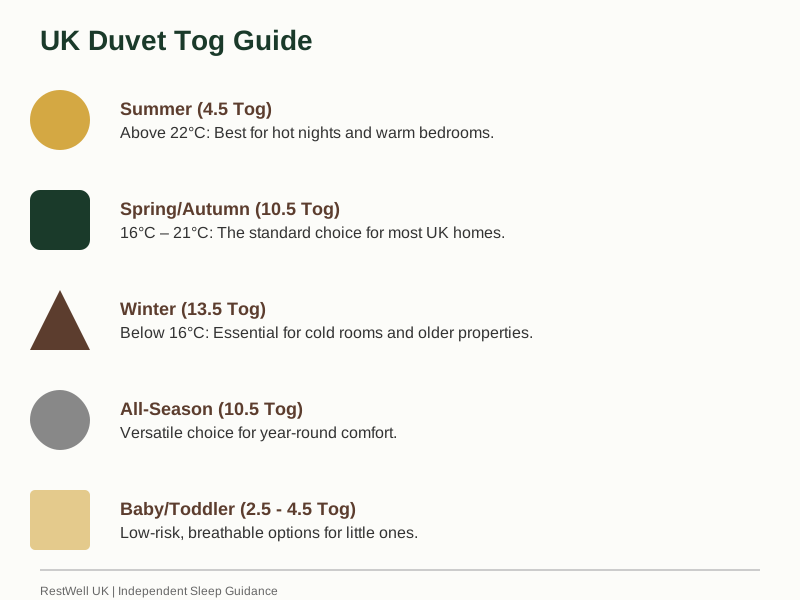
Summer — Bedroom above 22°C: A 4.5 tog duvet is the right call. This is minimal insulation — enough to feel like a covering without trapping heat. If your bedroom gets sticky in July, this is what you want.
Spring and Autumn — Bedroom between 16°C and 21°C: A 10.5 tog duvet is spot on. This is the sweet spot for the vast majority of UK homes with central heating. UK and European retailers consistently recommend this rating for exactly this temperature range. It’ll handle a cool spring night and a mild October evening without you reaching for the blanket pile.
Winter — Bedroom below 16°C: A 13.5 tog duvet is worth considering, but only if your bedroom genuinely stays cold. This applies to older properties without central heating in the room, top-floor flats with poor insulation, or homes where you turn the heating off in bedrooms to save money. For most people in centrally heated UK homes, this is too warm.
The single-duvet shortcut: If you only want to buy one duvet and deal with seasonal switching by adding or removing layers, a 10.5 tog is your safest all-year option. It’s warm enough for a 16°C bedroom with a thin sheet, cool enough for a 20°C room on its own. It’s not perfect for every situation, but it works across a wider range of conditions than any other single rating.
When considering duvets for a baby, note that those under 12 months should not use a duvet at all. The safest option for a cot is a cellular blanket, which allows airflow and doesn’t carry the same suffocation risk. Once they’re in a toddler bed and old enough to move the covering themselves, a low-tog option (2.5 to 4.5 tog) is appropriate, with adjustments for room temperature.
Now you know which tog matches your bedroom — get our Free Sleep Better Checklist to review the rest of your sleep environment and make sure nothing else is keeping you up.
How to Layer for Extreme Weather
If your home sits at one end of the spectrum rather than in the middle, you can use layering to make a single duvet work across the seasons.
When your bedroom runs cold:
- Use your 10.5 tog duvet with a cotton or wool blanket underneath — the blanket adds a layer of insulation between you and the cold air that seeps through the mattress
- A 13.5 tog duvet with just a sheet on top is a better starting point for consistently cold rooms — but check whether your heating might simply be the more cost-effective solution first
When your bedroom runs warm:
- Drop to a 4.5 tog duvet or use your 10.5 tog with just a sheet — the sheet alone provides a surprising amount of coverage without insulation
- If you live in a top-floor flat that bakes in summer, a lower-tog duvet with a mattress topper underneath can help — you get a comfortable surface without the full duvet weight trapping heat
The all-season layering trick: A 10.5 tog duvet plus a lightweight blanket you can add or remove gives you roughly the same flexibility as buying three separate duvets. In winter, use both layers. In summer, just the duvet. In spring and autumn, just the duvet with the blanket folded at the foot for when it gets chilly in the early hours.
While you can use two duvets together instead of buying a higher tog, it’s a bit of a faff and the result is often uneven — the duvets don’t sit together flush, and you end up with cold spots. If you consistently feel cold in bed, it’s better to buy the right tog rating to start with rather than doubling up. Regarding filling, the tog rating is a consistent measure across materials, but in practice, the same tog can feel different. Down clusters more efficiently and allows better air circulation, so a down duvet may feel lighter and less stifling than synthetic at the same rating. The tog number tells you the insulation; the filling tells you how it feels to sleep under that insulation.
If you’re curious about what a mattress topper can add to this setup — whether it’s warmth, comfort, or both — our mattress topper guide breaks down what difference it actually makes.
Tog Rating vs Bedroom Temperature Guide
| Temperature Range | Recommended Tog | Best For |
|---|---|---|
| Above 22°C | 4.5 | Summer, warm bedrooms |
| 16°C – 21°C | 10.5 | Spring, Autumn, most UK homes |
| Below 16°C | 13.5 | Winter, cold rooms, older properties |
| All-year (single duvet) | 10.5 | Versatile, easy switching |
| Baby/Toddler | 2.5 – 4.5 | Low-risk, breathable options |
Where to Go From Here
The short version: check your thermostat, not the calendar. If your bedroom is between 16°C and 21°C — which covers most heated UK homes year-round — a 10.5 tog duvet is your most versatile choice. It’s warm enough for a cool night, light enough for a mild one, and it means you won’t wake up at 3am kicking the duvet onto the floor.
The retailers aren’t wrong, exactly. They’re just giving advice for a house that many of us don’t live in anymore.
Tog is only one axis of the decision. Once you’ve settled on the right rating, the next step is matching it to size and material — our guide to choosing the right bedding walks through that part of the sequence.
Sources & Further Reading
This guide provides general recommendations based on standard thermal ratings. Always verify specific product specifications and consult a qualified professional for advice tailored to your home’s insulation and heating setup.