Why Does My Weighted Blanket Lose Beads? Causes and Fixes
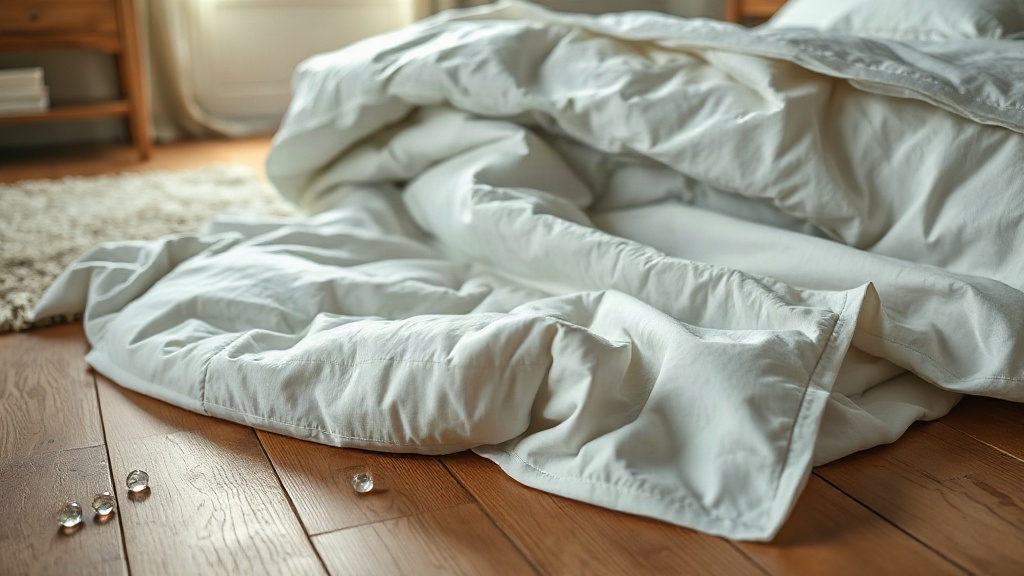
Beads escaping from one small seam can usually be patched with needle and thread, but beads appearing from multiple pockets signal the blanket’s internal structure has failed. That distinction—repair versus replacement—depends entirely on where the leaks are coming from.
Here’s how to diagnose the real problem and decide which path makes sense for your situation.
How Weighted Blankets Are Constructed
Understanding why beads escape starts with the blanket’s internal design. Rather than loose beads floating freely, quality weighted blankets contain beads sewn into individual quilted compartments. Picture a grid of pockets, each holding a measured amount of weight. This compartmentalised structure prevents the beads from shifting into uncomfortable lumps and ensures even weight distribution.
The outer cover you see is just a protective layer—the real work happens in the internal stitching that forms these pockets. The seams between compartments bear the constant tension of the beads’ weight and the mechanical stress from movement. Every time you adjust the blanket or wash it, these load-bearing stitches face another challenge.
Fabric quality matters less than stitching strength. Once the stitching weakens, beads find their way out through the smallest openings.
Similar structural principles apply to other bedding items. Our guide to cleaning your duvet explains how internal construction affects longevity, and the same logic holds true here.
Why Beads Actually Escape
Many assume bead loss means poor quality materials, but that’s rarely the case. The real culprit is almost always seam failure—the internal stitching between pockets giving way under stress.
Glass beads are smooth and round; plastic beads might be noisier but neither type escapes without an exit path. They need a gap, which appears when seams burst under two main types of pressure:
First, washing machine agitation. Even gentle cycles subject the blanket to significant movement. Internal pockets get tossed against each other and the drum walls. Over multiple washes, stitches weakened by the beads’ constant tension eventually give way.
Second, daily use strains. Dragging the blanket across the bed, pulling it straight, or bunching it underneath you all stress the seams cumulatively.
Beads don’t typically escape all at once. You’ll find a few beads initially, then more over subsequent weeks. By the time you notice a real problem, the structural damage is already underway.
Glass beads’ tendency to roll means even a few escaped beads can travel surprisingly far—into corners, under furniture. This scattering pattern indicates seam failure rather than a hole in the outer fabric.
If you’re considering a new weighted blanket, prioritise seam construction. Our weighted blanket guide details what to look for before purchasing.
Washing Habits That Hasten Leaks
Owners often unintentionally accelerate seam failure through washing choices. While many weighted blankets are machine washable, “machine washable” covers a wide range of tolerances. Following the care label precisely is crucial.
Common mistakes that compromise seams:
- Hot washes with high spin speeds: Heat and aggressive mechanical action weaken stitching faster than cold, gentle cycles.
- Skipping the laundry bag: A mesh bag won’t prevent seam failure outright, but it reduces friction between blanket and drum.
- Using fabric softener: The coating softener leaves can gradually weaken stitching integrity over time.
- Tumble drying unnecessarily: Unless the label explicitly approves it, air drying flat avoids heat damage and mechanical stress.
Washing causes incremental damage you can’t see. One improper wash might not break a seam, but repeated cycles with wrong settings will.
For broader bedding care principles, our piece on how to care for pillows covers similar maintenance concepts.
Repair or Replace? Assessing the Damage
A single small seam gap with minimal bead loss might be repairable with strong needle and thread. But once multiple seams have failed and beads pool in corners, the blanket’s weight distribution is compromised beyond practical repair.
When selecting a replacement, reinforced seam construction should be your priority. Some manufacturers, like Baloo, use double-stitched pocket designs that significantly improve durability. According to their product information, this construction choice makes their blankets machine washable and built to last. While not the budget option, verifiable stitching quality matters for longevity.
If you’re ready to shop, you can view weighted blankets with reinforced construction in mind.
Caring for Your Weighted Blanket
| Care Step | Recommended Approach | Reason |
|---|---|---|
| Washing | Cold, gentle cycle only | Minimises stress on internal seams |
| Drying | Air dry flat | Prevents heat damage to stitching |
| Protection | Use a mesh laundry bag | Reduces friction during washing |
| Maintenance | Avoid fabric softener | Prevents coating that weakens threads |
| Inspection | Check seams periodically | Early detection prevents major bead loss |
Common Questions Answered
Is DIY bead repair feasible?
For small tears with minimal bead loss, careful sewing with heavy-duty thread might work. But if the seam has fully split or significant beads are missing, replacement becomes necessary—DIY repairs can’t restore proper weight distribution once compromised.
Glass versus plastic beads: which is better?
Glass beads tend to be hypoallergenic, quiet, and distribute weight evenly. Plastic beads may be more durable but often feel noisier. Neither material inherently escapes more easily—seam quality determines leakage risk, not bead type.
What’s the right washing frequency?
Manufacturers’ recommendations vary considerably—some suggest every 2-3 months, others every 4-6 months. If you sweat heavily or don’t use a cover, you might need to wash more often. Always check your specific blanket’s care label, as some aren’t machine washable at all. Using a removable cover between washes reduces how often the blanket itself needs cleaning.
Weighted blanket longevity hinges on internal stitching integrity, not bead quality. Reinforced seams withstand washing and daily use far better than basic construction. Choose wisely, handle gently, and you’ll avoid finding beads on your floor.
For comparing patching attempts, professional repair services, and replacement options, our Bedding Troubleshooting: Why Your Bedding Goes Wrong provides detailed guidance.
Sources & Further Reading
Note: General guidance only, verify details with a qualified professional or official source.