Why Does My Mattress Topper Leak? Common Reasons
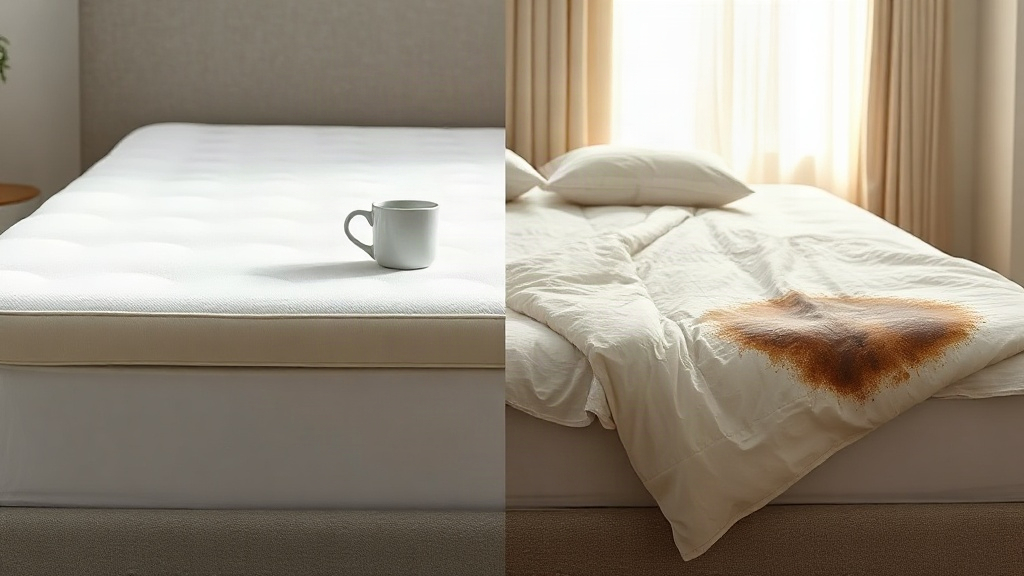
Is the moisture coming from inside your topper, or passing through it from your body? Most people misidentify the source and end up buying the wrong fix. A leaky topper isn’t always what it seems—the damp patch on your mattress could mean the waterproof backing has failed, or it could point to a weight problem that’s forcing fill through the seams.
The standard advice to “wash it more” or “replace it” misses the point when you’ve just invested in a decent topper. Understanding the actual mechanism behind the leak gives you a real shot at fixing it properly.
Spotting the difference between sweat and a structural leak
People often assume any dampness is just night sweats or a warm room. Sometimes that’s correct—a standard hollowfibre or memory foam topper will absorb moisture overnight, especially in a poorly ventilated bedroom. You wake up with a heavier, damper topper.
A genuine leak involves liquid escaping through or past the topper’s surface, either through a compromised waterproof backing or because the internal fill has broken through the outer cover. The fixes for these two problems are completely different.
Try this quick check: strip the bed and see where the dampness appears. If the wet patch is on the top sheet—the one touching your skin—it’s likely sweat absorption. If the wet patch is on the mattress surface or the underside of the topper feels damp, you’re probably dealing with a structural leak.
The pattern matters too. Sweat-related dampness concentrates around the chest and shoulders where body heat is highest. A leak tends to show up where pressure is greatest—often the bed’s centre or along seams. Dampness that follows the bed’s shape more than your body’s outline is a useful clue.
When the waterproof backing fails
Many toppers marketed as waterproof or splash-resistant feature a polyurethane laminate (PUL) backing bonded to the underside. This thin, flexible layer stops liquid that penetrates the top surface from reaching your mattress.
The bond degrades over time. Body heat, sheet friction, and the pressure of sleeping gradually break down the adhesive holding the PUL layer. Once peeling starts, gaps appear—and liquid finds them immediately.
This explains why toppers with waterproof backing often fail from the centre outward. The middle of the bed experiences the most pressure and heat, so that’s where delamination typically begins. What looks like a small damp patch on the mattress is usually the visible tip of a much larger separation underneath.
When the fill breaks through the cover
The second leak type involves overload. Mattress toppers have a weight limit—usually designed for a single adult or around 70–80 kg combined. Add a heavy mattress protector, a second person, or a dense memory foam topper, and you’re pushing the outer cover beyond what its stitching can handle.
The fill—whether hollowfibre, memory foam clusters, or microfibre—starts pushing through seams and stitching. Once a gap forms, fill migrates, thins in places, and liquid passes through weakened sections. This failure mode often appears when people add a thick quilted protector on top of their topper and wonder why leaks start months later.
These two leak types have different signatures. Delamination produces a damp patch on the mattress that’s consistently in the same spot and gradually worsens. Fill break-through creates more irregular dampness that shifts position, often accompanied by the topper feeling lumpy or thinner in places.
The mattress protector dilemma
A mattress protector itself isn’t the problem, but the wrong protector layered on top of your topper can create one.
A good protector acts as a practical barrier against spills and sweat. The issue arises when you stack a heavy, quilted waterproof protector on a topper already near its weight limit. You’ve added extra load the topper wasn’t designed for, potentially trapped heat against the PUL backing (accelerating delamination), and created two layers that resist airflow.
The combination of heat and pressure causes the damage. A breathable, lightweight protector on a topper works fine. A thick quilted protector used nightly by two adults is where the system fails. Many owners find that switching from a heavy quilted protector to a lighter, more breathable option significantly extends their topper’s life.
Before blaming the topper, check what’s sitting on top. If you’re using a thick protector, try removing it for a few nights to see if the dampness stops—that’s your diagnostic test.
Practical fixes for each leak type
Once you’ve identified the problem, here’s what to do:
For delamination, you can’t fully repair it. The PUL backing is bonded—once peeling starts, gluing it back is temporary at best. The topper needs replacing. If the leak is small and the topper otherwise comfortable, a washable bed pad placed on top can manage the problem short-term while you save for a replacement. The pad soaks up liquid before it reaches the damaged backing and goes straight in the wash.
For fill break-through, reduce the load. Switch to a lighter protector, stop layering extra blankets on top, or check if the topper was actually rated for two-person use. Reducing the load won’t reverse existing damage but will prevent it worsening.
The optimal layering order is: Mattress → mattress protector (breathable, lightweight) → topper → washable bed pad if needed → sheet. This protector-first approach safeguards the mattress without overloading the topper.
If night sweats are a genuine factor, a quality washable bed pad is the most practical solution. It absorbs what your body produces, goes in the machine, and doesn’t interfere with the topper’s structure. The NHS notes that washable bed pads sit on top of the mattress and soak up overnight leaks, making them a simple, effective option that doesn’t require replacing your entire sleep setup.
Now you know what to look for—Get the Free Sleep Better Checklist to audit your current setup and see what needs changing.
Diagnosing your leak
| Symptom | Likely Cause | Fix Strategy |
|---|---|---|
| Damp patch on top sheet | Absorbed sweat | Improve ventilation, wash bedding |
| Damp patch on mattress | Delaminated backing | Replace topper, use washable bed pad |
| Irregular dampness | Fill break-through | Reduce load, switch to lighter protector |
| Dampness in centre | High pressure point | Check waterproof backing integrity |
| Smell developing | Trapped moisture | Air out topper, check for leaks |
| Lumpy feel | Fill migration | Reduce weight on topper |
| Dampness in winter | Poor room ventilation | Open windows, use breathable bedding |
Common questions about topper leaks
Can washing fix a leaking mattress topper? No. Washing cannot re-bond a delaminated PUL backing—once that waterproof layer has separated from the fill, cleaning won’t restore it. If your topper leaks from structural failure, it needs replacing. Washing helps with odours and hygiene but doesn’t fix mechanical problems.
Why does my topper get wet in the middle of the night? This is usually either sweat absorbed by the fill (especially in poorly ventilated rooms) or early-stage mechanical failure. Sudden, localised dampness suggests waterproof backing delamination. Gradual dampness that’s worse in summer or during illness points to absorption-related moisture.
Should I use a waterproof sheet over my topper? Yes, but choose carefully. A breathable, lightweight protector works well. A heavy, quilted waterproof sheet adds load and heat that can accelerate seam stress and delamination. If you’re experiencing leaks with a thick protector, try swapping it before replacing the topper.
The two main reasons mattress toppers leak are waterproof backing breakdown over time and fill bursting through the cover under excessive weight. Neither is your fault—both are predictable failure modes given how these products are constructed. The positive news is that once you identify which one you’re dealing with, the solution is usually clear: reduce the load, manage moisture separately, or replace the topper when it’s genuinely finished. You don’t need to replace everything.
A leaking topper often indicates a missing or failed mattress protector rather than a topper defect. For readers who want to audit their entire bedding stack from mattress upwards, our Bedding Troubleshooting: Why Your Bedding Goes Wrong provides the broader context.
Sources & Further Reading
Note: General guidance only, verify details with a qualified professional or official source.