Why Does My Duvet Feel Damp? How to Fix It

When someone says their duvet feels damp, they could mean two very different things: either moisture from the room has condensed on the surface, or the filling itself is holding trapped humidity. The fix depends entirely on which problem you’re facing.
The honest answer is that your duvet is likely fine. What’s not fine is the microclimate trapped between you and the cover — and in most UK bedrooms, that microclimate is far more humid than it should be. This is a fixable problem. Here’s what’s actually going on, and what to do about it.
The “Damp” Feeling: What’s Really Happening?
That cold, clammy feeling on waking is usually moisture that’s condensed on the surface. It’s not a leak. Vapour from your body turns back to liquid because it had nowhere to go. The space between your skin and the duvet cover becomes a microclimate: warm, moist air trapped under a layer of fabric.
Two things typically cause this. The first is the duvet cover — whether it’s made from a fabric that breathes. The second is the humidity level in the bedroom. Approved Document F sets indoor moisture targets for new dwellings, and winter humidity can often reach levels where condensation becomes likely on cooler surfaces like your duvet.
There’s a direct link between condensation on bedroom windows and damp-feeling bedding. The same excess moisture that’s fogging up your double glazing is saturating the air your duvet sits in. Improving ventilation tends to fix both at once — they’re two symptoms of the same cause.
The sealed-space problem is particularly common in modern extensions and converted flats, where secondary glazing and solid walls cut off natural air movement. If your bedroom was added on or has no working window trickle vent, the humidity you generate overnight has nowhere to escape.
The Cover Factor: Fabric Breathability Matters
Your duvet cover does more work than the duvet itself when it comes to moisture management. If your cover is polyester, it’s acting as a moisture barrier. Polyester fibres are relatively impermeable to water vapour, meaning the moisture from your body gets trapped underneath rather than passing through.
Over time, body oils, skin cells, and ambient moisture build up in the cover fabric. This is why polyester covers can start to feel damp even when the room isn’t particularly humid — the material is retaining moisture from previous nights. Owners who’ve switched to natural-fibre covers often report the difference quickly, even without changing anything else.
Breathable covers like cotton allow water vapour to pass through, keeping the duvet microclimate drier. Cotton is the more affordable option. While bamboo is often marketed as softer, the key benefit for bedding is its breathability. Neither is expensive in the context of bedding — a decent cotton double cover is a fraction of what people spend on a new mattress.
The trade-off is durability and wash temperature. Cotton can shrink if washed too hot; bamboo requires more careful handling. But if you’re replacing a polyester cover that’s making your duvet feel damp, switching to a breathable material is the most effective change you can make. Everything else is secondary.
Your Bedroom’s Role in Humidity Control
Even with a breathable cover, high bedroom humidity will still cause dampness. The average UK bedroom in winter sits at a humidity level that would be considered uncomfortable. The biggest driver isn’t weather — it’s what happens inside the home. Drying clothes indoors adds significant water vapour to the air. A single load of washing dried in a poorly ventilated room can push humidity to problematic levels.
So the cover is one half of the problem. The room is the other. The good news is that the room fix is mostly free.
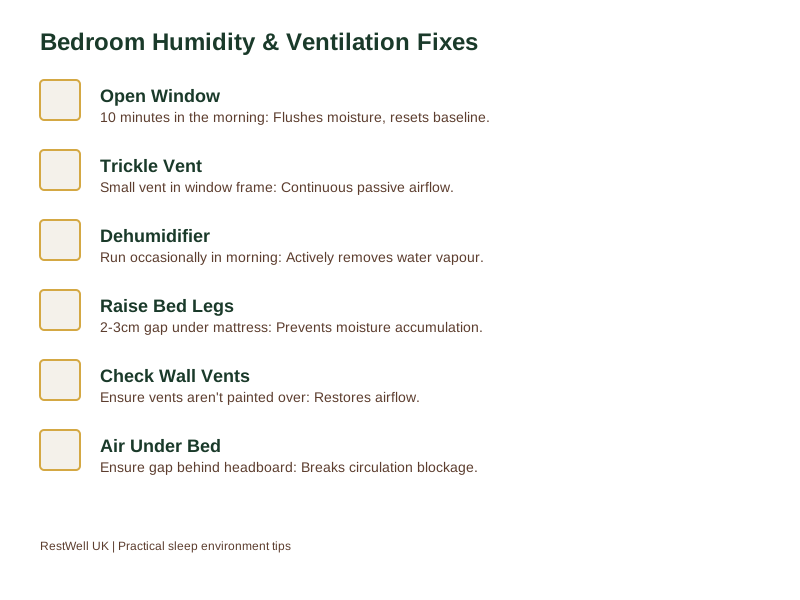
Opening a window for ten minutes in the morning makes a measurable difference — it flushes out the accumulated overnight moisture and resets the room’s humidity baseline. If your bedroom window doesn’t open wide, a trickle vent or a small dehumidifier used occasionally will do the same job. You don’t need to run it all night; an hour in the morning while you get ready is usually enough.
Under-mattress ventilation matters more than most think. If your bed is pushed flush against a cold wall or sits on a solid base with no airflow underneath, heat and moisture accumulate beneath the mattress and work their way up through the bedding. Raising the bed slightly, or ensuring there’s a gap behind the headboard, can break that circulation problem. This is an even more acute issue in a motorhome or campervan, where the sealed space traps moisture aggressively — and the fix is almost always ventilation underneath the sleeping surface.
If you’re in a flat or extension with no working window trickle vent and persistent condensation, it’s worth checking whether your windows have ventilation slots that have been painted over. This sometimes happens in rented properties, and it directly contributes to the humidity problems that make bedding feel damp.
Is Your Duvet Actually the Problem?
Your duvet itself is rarely the source of the issue. Duvets don’t generate moisture. If the filling inside is synthetic, it can hold onto dampness if the cover has been trapping it for a long time — but that’s a consequence of the cover or room problem, not the cause. For example, tumble drying will remove surface moisture temporarily — but it’s a sticking plaster, not a fix. If the cover is trapping moisture or the room humidity is high, the duvet will be damp again by morning. Dry it if you need to sleep comfortably tonight, but address the underlying cause so it doesn’t become a daily routine.
Before you assume your duvet needs replacing, run a quick check. Does the filling feel lumpy or bunched in places? Does it smell musty even after a wash? Is it noticeably heavier than it used to be? If the answer to all three is no, the duvet is almost certainly fine. The issue is upstream — the cover or the room. Prolonged dampness in bedding can encourage dust mites and may contribute to mould growth in the filling over time. While not an emergency for most people, it can aggravate existing allergies or respiratory issues. Getting on top of the humidity and cover problem eliminates this risk.
If you are replacing, look for a duvet with a cotton casing rather than polyester. Many manufacturers use a polyester outer casing even with a cotton-filled duvet, which defeats the purpose. Check the label. If it says “100% cotton filling” but the outer is polyester, you’re still trapping moisture. Remember that tog rating measures warmth, not breathability. A 13.5 tog duvet will keep you warmer but won’t stop moisture accumulating if the cover or room is trapping it. In fact, a thicker duvet can sometimes make dampness feel worse because it insulates your body heat more effectively, making the surface temperature of the cover closer to room temperature — exactly where condensation forms.
Quick bedroom humidity check: If you notice condensation on your bedroom windows in the morning, your room humidity is almost certainly high enough to cause problems. That’s your signal to ventilate — and the same moisture affecting your windows is affecting your duvet.
Improving Your Bedroom Environment
| Action | Description | Expected Impact |
|---|---|---|
| Open Window | 10 minutes in the morning | Flushes overnight moisture, resets humidity baseline |
| Trickle Vent | Small vent in window frame | Continuous passive airflow for sealed rooms |
| Dehumidifier | Run occasionally in morning | Actively removes excess water vapour from air |
| Raise Bed Legs | Create gap under mattress | Prevents heat and moisture accumulation beneath bed |
| Check Wall Vents | Ensure trickle vents aren’t blocked | Restores airflow in flats and extensions |
| Air Under Bed | Ensure gap behind headboard | Breaks circulation blockage against cold walls |
Next Steps for Persistent Dampness
The fix for a damp-feeling duvet is almost always one of two things: swap the cover to a breathable material, or get the bedroom humidity under control. In most cases, it’s both. The duvet itself is unlikely to need replacing.
Start with the cover — it’s the cheapest, fastest change and the one with the most immediate effect. Then add a simple morning ventilation habit: ten minutes with a window open while you make the bed and get dressed. If you have a condensation problem on your windows, that’s your signal that the room needs more than a cover swap.
If the damp feeling continues after addressing the cover and ventilation, check for other symptoms like musty smells or visible mould. These could indicate a more complex humidity issue that requires professional assessment. For persistent or multi-symptom bedding problems, our comprehensive Bedding Troubleshooting guide covers the escalation path.
If you’re ready to take a structured approach to sorting out your bedroom environment, grab the free Sleep Better Checklist. It’s a step-by-step guide to the changes that actually make a difference, based on what UK homeowners and renters report working.
Get the Free Sleep Better Checklist and take the guesswork out of it.
Sources & Further Reading
- Building Regulations Approved Document F (Ventilation) — gov.uk
- National House Building Council (NHBC) — homeowner guidance on condensation and damp
- Energy Saving Trust
Note: General guidance only, verify details with a qualified professional or official source.