Can You Flip a Pillow-Top Mattress? (UK Guide)
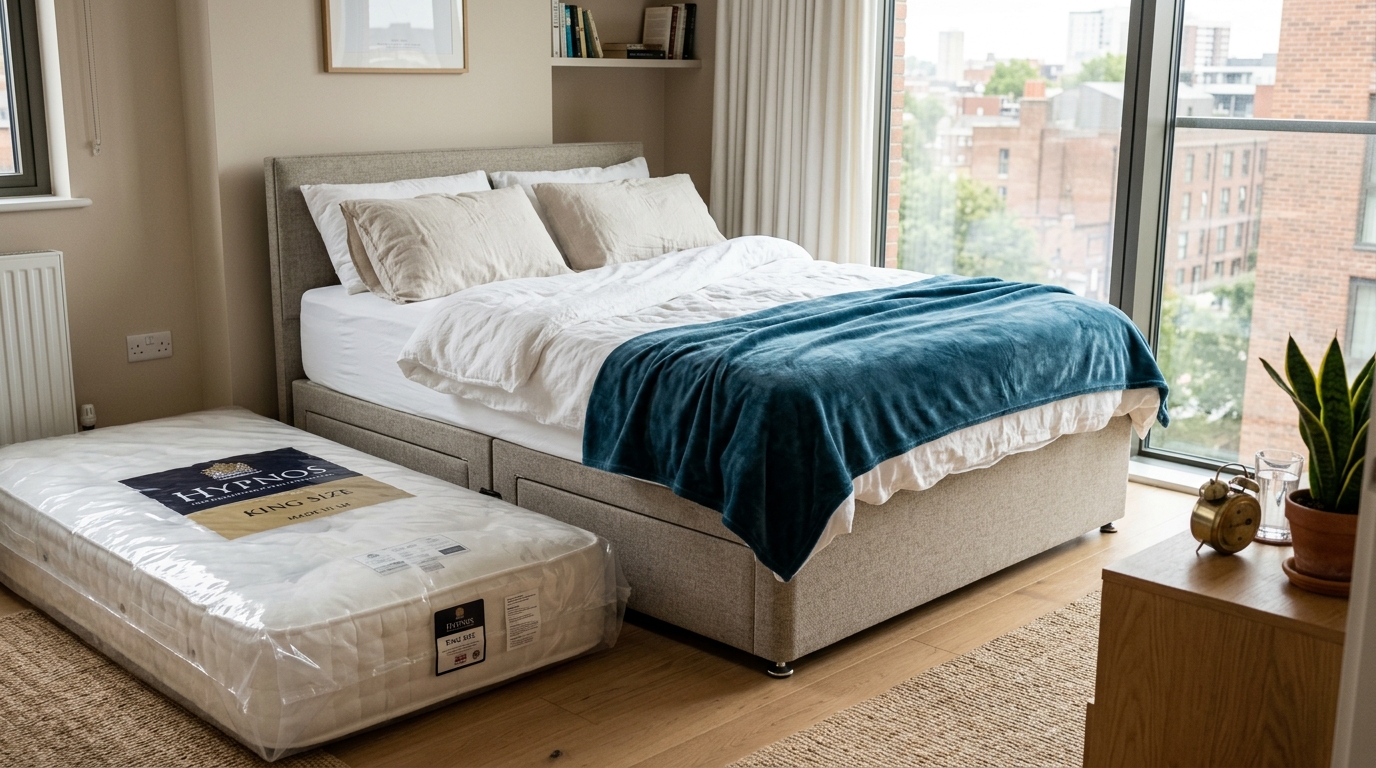
If you’ve ever been told to “just flip it” and are now staring at a lumpy, hard surface, you’re not alone. The short answer is no—most UK pillow-top mattresses are one-sided, so turning them upside-down will completely ruin the comfort layer. Plenty of renters try to rescue a sagging bed this way, only to end up sleeping on what feels like a concrete slab. You can’t flip it, but rotating it properly will save your back and your deposit.
Why Does Flipping a Pillow-Top Mattress Fail?
Flipping a pillow-top mattress fails because the plush comfort layer is only built into the top side. The underside is just a hard, uneven support base. Turn it over, and you’re lying directly on the pocket springs or dense fibre core, which is not meant to be slept on. It causes immediate joint pain.
A pillow-top mattress isn’t a double-sided sandwich. The construction is more like a two-layer cake:
- Support base – usually pocket-springs or a dense fibre core that bears the weight.
- Comfort top – a plush foam or gel layer that gives the soft feel you actually sleep on.
Because the comfort layer sits entirely on top, the underside is deliberately hard. Under UK law, specifically the Furniture and Furnishings (Fire) (Safety) Regulations , manufacturers aren’t required to make mattresses double-sided. That’s why most major UK brands ship a single-side design.
Flip a pillow-top and you sleep on the support base — a hard, unfinished surface that was never meant to be the sleep side. On a dear mattress that can also crush the comfort layer against the frame, which is the sort of damage warranties often refuse to cover.
Flipping does a belt-and-braces kind of damage: you expose the hard base, ruin the expensive comfort layer, and risk voiding your warranty entirely.
The Solution: How to Rotate a Pillow-Top Mattress
Rotating is the proper maintenance method, and it’s surprisingly easy once you know the trick. Here’s the step-by-step plan most renters overlook:
1. Mark the rotation schedule
Set a reminder on your phone for every three to six months. A standard 180-degree turn (swapping the head to the foot) spreads your body weight evenly across the surface. This stops the main sleeping zones from dipping prematurely.
2. Clear the bedroom
Strip the bed completely of sheets, the duvet, and any extra toppers. You’ll need a clear path to the wall and enough space to pivot the mattress without knocking over your bedside lamp. It sounds obvious, but skipping this step is how things get broken.
3. Enlist a mate
A two-person lift is a bit of a faff, but it saves you a nasty back injury. One person needs to hold the head end while the other takes the foot. Pillow-tops are notoriously heavy, so don’t try to hero this on your own.
4. Use a mattress slider
Slide a cheap plastic mattress-moving kit (roughly £10) or even a few large, flattened cardboard boxes under the mattress. This reduces friction against the bed frame. It lets you glide the heavy unit across the slats or base without tearing the fabric.
5. Turn it 180 degrees
Carefully pivot the mattress so the head end now faces the foot of the bed. Make absolutely sure you keep the pillow-top side facing up the entire time. Once it’s straight, nudge it back into alignment with the frame.
6. Replace the bedding
Put your mattress protector and fitted sheets back on. If you use an extra topper, check that it’s still centred properly before you make the rest of the bed. You’re now sorted for another few months.
Rotation redistributes the pressure points caused by your sleeping habits. Over time, the springs or foam beneath the pillow-top wear unevenly. Flipping would expose that worn side to the bed frame, but rotating keeps the soft side on top while evening out the support.
Do not rotate a king-size pillow-top solo with just your back and a broom handle as a lever. The mattress will tip, scratch the floor, and leave you wishing you had waited for a second pair of hands.
Signs Your Mattress Needs Attention (Beyond Rotation)
Rotation helps prevent issues, but sometimes the sag is already too deep to ignore. Look out for these red flags:
- Visible dip in the centre or a lump on one side that doesn’t disappear when you get out of bed.
- Waking up with back, shoulder, or hip pain that is persistent, not just a one-off from sleeping funny.
- Uneven wear where the pillow-top feels noticeably thinner on one side, or the edges feel hard.
- “Hammock effect” where the middle sinks while the edges stay raised, which is incredibly common in older spring units.
If any of these appear, rotation alone won’t sort it. You have a few options that won’t break the bank:
- Add a supportive mattress topper – a firm latex or high-density foam topper can level out a minor dip without you having to replace the whole bed.
- Check the bed frame – a sagging slatted base can make mattress wear much worse. Reinforce it with extra slats or a solid piece of plywood.
- Consider a professional repair – some UK retailers will re-foam the top for a fee. It’s not cheap, but it’s usually less than buying a brand-new premium mattress.
A deep dip after a few years is often the slats plus the mattress, not the mattress alone. A £70 high-density foam topper and a tightened slatted base will level a minor sag. That is cheaper than a new bed, and it is the first thing to try.
UK Rental & Homeowner Troubleshooting
Renters often worry that any mattress maintenance might breach the tenancy agreement or cause damage. Here’s how to keep things tidy and landlord-friendly:
- Document your rotation – take a quick photo before and after each 180-degree turn. It shows you’re maintaining the property, not neglecting it.
- Know the “fair wear and tear” clause – most UK tenancy contracts allow normal wear, and rotation is recognised as standard upkeep.
- Avoid flipping at all costs – a flipped pillow-top can be deemed deliberate damage, potentially costing you a deposit deduction when you move out.
- Use a mattress protector – a £15-£30 protector not only shields against damp and spills but also adds a layer of friction protection, making the landlord’s job easier.
Rotating a pillow-top can add roughly two to three years to its life, according to guidance from The Sleep Charity on mattress longevity. That’s a solid win for anyone on a tight budget.
Common Questions
Can you turn a pillow-top mattress upside down?
No. Pillow-top mattresses are strictly one-sided. Turning them upside down exposes the hard support base and crushes the comfort layer, which usually leads to immediate back pain and permanent damage to the mattress.
How often should I rotate my pillow-top mattress?
You should rotate it 180 degrees (head to foot) roughly every three to six months. Sticking to this schedule keeps the wear even across the surface and stops the centre from sagging under your body weight.
Does rotating a mattress fix sagging?
Rotation prevents sagging from getting worse, but it cannot reverse the damage. If there is already a visible, permanent dip in the foam or springs, rotation alone won’t fix it and you will likely need a firm topper or a replacement.
Is it safe to sleep on the bottom of a pillow-top mattress?
It is definitely not recommended. The bottom is designed purely for structural support, not comfort. Sleeping on it means lying directly on hard springs or dense fibre, which can cause severe joint pain because the surface has zero give.
Mattress Maintenance Guide
| Action | Frequency | Purpose |
|---|---|---|
| Rotate | Every 3-6 months | Even out wear and prevent sagging |
| Flip | Never | Ruins the comfort layer on one-sided mattresses |
| Clean | As needed | Remove dust mites and allergens |
| Protect | Always | Shield against spills and stains |
| Inspect | Annually | Check for visible dips or lumps |
Keep Learning
You’ve learned that flipping a pillow-top is a complete non-starter, but a simple 180-degree rotation every few months will keep the sag at bay and extend the mattress’s life. If you spot deeper dips or persistent pain, a supportive topper or frame fix is the next step.
Ready to audit your whole bedroom setup? Grab our free Sleep Better Checklist – it walks you through everything from mattress rotation to lighting and temperature, so you can finally get a good night’s sleep without throwing money at expensive gadgets.
If you’ve got any lingering questions about dealing with a dodgy rental bed, feel free to get in touch – we’re happy to help you sort out the details. Or, if you want to see what other cheap bedroom fixes actually work, have a browse through our blog .
Sleep well, stay sorted.
Related Guides
For a complete overview, see our Why Is My Mattress Sagging in the Middle? .
Further Reading
Note: General guidance only. Verify current details with a qualified professional or official source.