Best Mattress for Back Pain UK: Pain Type Guide
As an Amazon Associate we earn from qualifying purchases. This page contains affiliate links — if you buy through them, we earn a small commission at no extra cost to you.
You’ve been waking up with a stubborn ache in your lower back for weeks, and the culprit is probably the mattress that’s been sagging in the middle of your bedroom for five years. You’ve tried stretching, a new pillow, and even a cheap topper, but nothing stops the stiffness. If your bed resembles a hammock, throwing money at quick fixes won’t work. You need a surface that actually supports your spine.
Ready to stop the morning grind? Grab our free Sleep Better Checklist and make sure your bedroom setup isn’t the hidden cause of your back pain. Get the Free Sleep Better Checklist →
Quick Picks
- Emma Original Lite (paid link) — Best for lower-back compression
- Simba Hybrid (paid link) — Best bounce for back pain
- Sealy Alston Gel Advantage (paid link) — Best for neck stiffness
See Sealy Alston Gel Advantage on Amazon → (paid link)
See Simba Hybrid on Amazon → (paid link)
View Emma Original Lite on Amazon → (paid link)
Why is Medium-Firm the UK Standard for Back Pain?
A medium-firm mattress is the standard for back pain because it provides enough support to maintain the spine’s natural S-curve while offering enough give to cushion your hips and shoulders. The NHS recommends a firm and supportive surface, but a completely hard mattress pushes the hips up and creates pressure on the lower back. A soft one, meanwhile, lets the body sink so far that the spine flattens out. Both end in pain.
In British terms, “medium-firm” isn’t a steel plate; think of it as a firm pillow that holds your head up without pushing it away. That balance matters more here than on the continent, where sleepers tend to favour a firmer feel across the whole surface.
The “Sink In” Myth: Memory Foam vs. Latex
A lot of folks swear off memory foam because they’ve heard it turns the bed into a mud-pie. The problem isn’t foam itself – it’s low-density foam that collapses under your weight. High-density memory foam (around 55 kg/m³) provides pressure relief without the “bog” feeling and is actually spot on for hip and lower-back pain.
Latex, on the other hand, gives you bounce and a cooler sleep surface – perfect if you’re a hot sleeper or live in a well-heated Victorian terraced house. It’s naturally breathable and resists the sag that cheap foam develops after a year or two.
Hybrid mattresses combine pocket springs for core support with a layer of high-density foam or latex on top. That’s the belt-and-braces approach: you get the spinal alignment of springs and the contouring comfort of foam without the sink-in nightmare. If you take a look through our blog at different materials, you’ll see hybrids mentioned constantly for this exact reason.
Best Mattresses for Lower Back Compression
If your main issue is a stiff lower back that clicks when you get out of bed, you need zoned support. This means the mattress is firmer under the waist and softer under the shoulders and hips. A hybrid with pocket springs does this naturally, and the extra foam layer smooths out any minor dips.
Emma Original Lite (paid link) — This model uses eight zones of support, with the middle third a touch firmer. The aim is just enough hip sink to relieve pressure while the waist stays level. Reviewers love waking up without that familiar lower-back click. The only hiccup is the three-day delivery window, which can be a faff if you’re on a tight schedule.
→ Check Price on Amazon (paid link)
Simba Hybrid (paid link) – Another solid choice, especially if you like a bit more bounce. Its “Airgocell” foam layer is high-density, so you won’t feel like you’re sleeping in a swamp. Some sleepers with a herniated disc find the radiating pain down the leg eases noticeably within a week of switching, though results vary and this isn’t a substitute for medical advice.
→ Check Price on Amazon (paid link)
Budget alternative – Silentnight Miracoil – Roughly £300, it uses a coil-based spring system rather than a premium foam layer, but still delivers reliable zoned support for back pain. Expect a traditional spring feel rather than close contouring, and the core support holds up well for several years on a solid platform.
Best Mattresses for Neck Stiffness & Poor Alignment
Neck pain often stems from a sagging surface that lets the head dip too low, twisting the cervical spine. You need a surface that stays flat from edge to edge and doesn’t trap heat – a hot night can make the neck muscles tense up.
Sealy Alston Gel Advantage (paid link) — This hybrid pairs a gel-infused pillow-top comfort layer with a supportive pocket-spring core, so the head and neck get cushioning rather than pressure points, without the whole mattress going soft. That combination is what you want if you sit hunched at a desk or a screen for hours and then need the neck to stay level overnight. The downside? It can feel warm in summer, so a breathable duvet helps.
→ Check Price on Amazon (paid link)
Silentnight Neo Memory – Uses a medium-density foam that’s firmer than typical memory foam, keeping the head from sinking too deep. The surface stays relatively even from edge to edge, which is the actual job for neck pain — not a plush sink. It does retain a bit of heat, so a mattress protector with cooling tech is worth the extra £30.
Budget alternative – Dormeo Options – Around £200-250, it uses memory foam layers to give a flat, even surface. No fancy cooling layer, but the firm foam stays level and does the job for people on a tight budget. The edges can feel softer than the centre, so you may notice a slight dip if you roll right to the edge.
What Happens Inside a Mattress During the Trial?
To properly test a mattress for back pain during a sleep trial, you need to sleep on it for at least 30 nights to let your muscles adjust to the new support level. In the UK, the legal minimum trial period for online purchases is 14 days, but most reputable brands give you 100 nights to really feel the difference. You can’t judge a mattress after one night.
Here’s a quick checklist for testing your new bed:
- Day 1-7: Sleep in your normal position and note any immediate pressure points.
- Day 8-30: Change positions (side, back, stomach) and see if the mattress still supports your spine.
- Day 31-60: Try a slightly cooler room; if you’re a hot sleeper, see if the mattress stays comfortable.
- Day 61-100: Assess durability – does the surface stay even? Is there any sagging after a month?
Eve Mattress — Offers a 100-night trial and a “no-questions-asked” return. The generous trial gives your back the time it needs to adapt. The only snag is that you have to cover the return shipping cost once, which is a bit of a faff.
Now that you know how to test, grab the Free Sleep Better Checklist and make sure you’re covering all the bases before you commit.
Common Mistakes When Buying for Back Pain
When you’re desperate for a good night’s sleep, it’s easy to make a rushed decision. Watch out for these traps:
- Buying too soft: The mattress collapses under your weight, flattening the spine and creating new pain.
- Ignoring edge support: Falling off the side forces you to twist, straining the back.
- Chasing price alone: Cheap springs mean the core can go flat in a year, leaving you back at square one.
It’s a common trap: a discount-store mattress around £150 can feel fine at first, then chronic lower-back pain sets in within a month once the cheap foam gives way. The lesson? Don’t skimp on the core – it’s worth the investment. If you’re unsure about where to start or need specific advice, feel free to get in touch with us.
At a Glance
Is a hard mattress better for back pain?
No. A completely hard mattress creates pressure points at your hips and shoulders, forcing your lower spine into an unnatural curve. Medium-firm strikes the right balance between support and comfort for most back-pain sufferers, giving just enough to keep your spine aligned.
How long should a mattress for back pain last?
Ideally, a good mattress should last you 7 to 10 years. The Sleep Charity advises replacing your bed every seven years, but if you start waking up in pain after just a couple of years, it’s a clear sign the core support has degraded and it’s time for a replacement.
Can I put a topper on my old mattress to fix back pain?
No, not if the mattress itself is the problem. A medium-firm topper can add a bit of surface comfort, but if the underlying mattress is sagging or the springs are shot, a topper will just sink right into the same dip.
Do I need a specific size for back pain?
A King size gives you plenty of room to move without rolling into your partner’s space, which often causes twisty, awkward spinal positions. If your bedroom is tight, at least aim for a standard double, but go larger if you have the floor space.
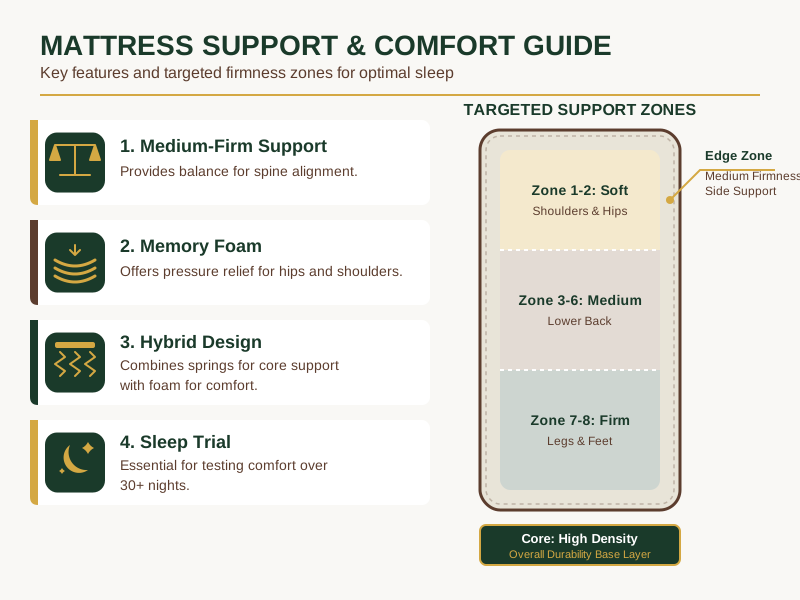
Mattress Support Zones Reference
| Zone | Firmness | Target Area |
|---|---|---|
| 1-2 | Soft | Shoulders & Hips |
| 3-6 | Medium | Lower Back |
| 7-8 | Firm | Legs & Feet |
| Edge | Medium | Side Support |
| Core | High Density | Overall Durability |
What to Read Next
The key is simple: match your pain type to the right material, give the mattress a proper trial, and avoid the common pitfalls that turn a well-intentioned purchase into a new source of ache. If you’ve pinpointed whether it’s lower-back compression or neck stiffness, you now have a shortlist of hybrids and latex options that actually work for those problems.
Want to know more about the team behind these guides? You can read all about us here.
Ready to lock in a pain-free night? Grab the Free Sleep Better Checklist, run through our quick audit, and you’ll know exactly what to look for when you click “buy”. Get the Free Sleep Better Checklist →
Sleep well, wake up refreshed, and give your back the break it deserves.
Related Guides
For a complete overview, see our Best Mattress for Side Sleepers UK .
Sources
As an Amazon Associate we earn from qualifying purchases. The products linked above are ones we recommend based on independent research and owner feedback.