How to Choose a Bed Frame for Mattress Support (Without the Dip)
You can spend a fortune on a brand-new mattress, but if the frame underneath it is bowing, you are throwing your money away. That little dip in the middle of the bed isn’t just an eyesore. It is a fast-track ticket to a sagging mattress, a voided warranty, and waking up with a stiff lower back. The frame matters just as much as the mattress itself, and fixing a bad base is often cheaper than replacing a ruined bed.
The “Dip” Danger: Why Cheap Frames Ruin Mattresses
A mattress is designed to lie flat on a solid, level surface. When the base sags even a little, the mattress follows suit, creating a valley that forces your hips and shoulders into pressure points. That uneven support doesn’t just do your head in—it can actually void your warranty. The National Bed Federation usually expects a proper foundation, and if a frame sags more than a couple of inches, manufacturers will often reject your claim.
A brand-new pocket-spring mattress can show a dip in weeks if the slats underneath have already warped from damp. Manufacturers will often reject the warranty because the foundation failed, not the mattress. A sagging frame does to your mattress what a leaky roof does to a loft conversion—it ruins the whole structure.
Are Slats or Solid Bases Better for Mattress Support?
The short answer is that well-spaced slatted bases are better for most modern mattresses because they provide solid support while allowing air to circulate, stopping damp. Solid divans offer a perfectly flat surface that prevents sagging, but they trap heat and limit airflow in stuffy bedrooms.
Solid divans – the massive, often upholstered platforms you see in hotels – give incredibly even support because there’s nothing to flex under you. The downside? They trap body heat, limit airflow, and can look a bit heavy for a small UK bedroom.
Slatted bed frames are the workhorse of British homes. Fixed slats act like a series of tiny bridges; if the spacing is too wide, the mattress will flex between them, especially around the centre where most of your weight sits. Sprung slatted bases add a bit of give, which feels nice on a softer mattress but can be too soft for firm pocket‑springs, leading to that dreaded dip.
A cheap fixed‑slat frame under a memory‑foam topper is a common way to get this wrong: the centre slats bow and the topper starts to feel like a pancake. A sprung slatted base with tighter spacing is the usual fix. So, for most modern mattresses, a well‑spaced slatted base beats a solid divan on airflow and is spot on for support, provided the slats are sturdy.
UK Climate Check: Wood vs. Metal in Damp Homes
British humidity is a silent killer for wooden slats. In a typical terraced house, indoor condensation often spikes in winter when the heating goes on and the windows stay shut. Over time, cheap pine or spruce slats absorb that moisture, swell, and warp. This is the exact thing that creates the dip we are trying to avoid.
Metal slats, especially steel, are immune to rot and warping. They usually come with rubber stoppers that mute the creak that makes you think the whole house is falling apart. Replace old pine slats with a steel kit in a damp flat and the difference is night and day: no more squeaks, and the mattress stays level for years.
If you live in a particularly damp area—think coastal flats or older Victorian terraces where condensation pools on the windows—a metal slat kit is worth the investment. It is not cheap, but not a con either when you compare the cost of buying a new mattress every few years.
The “Dip Test”: How to Check Your Current Frame
Before you throw money at a new mattress, you need to know if your current frame is actually the problem. Here is how to check if your bed base is up to the job.
1. Try the tin can test
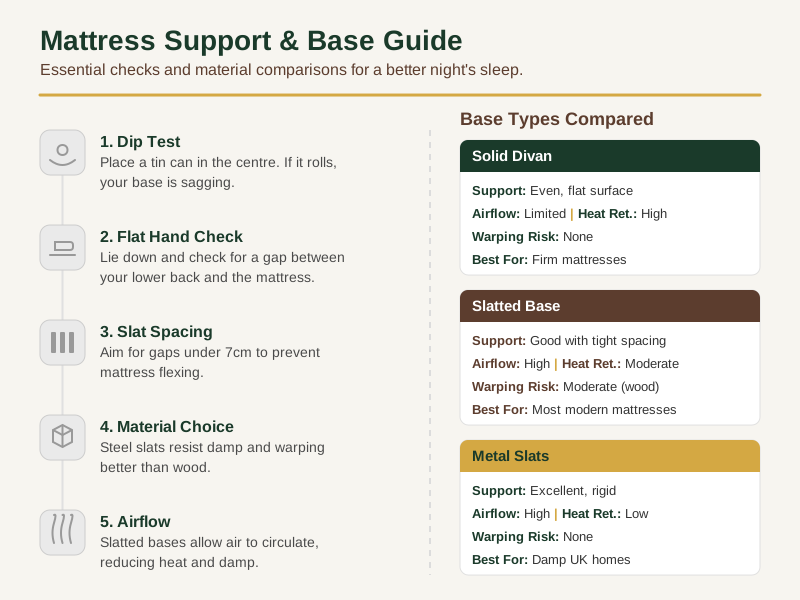
Strip the bedding off so you are looking at the bare mattress. Place an empty baked bean tin directly in the centre of the bed. If the can rolls toward the middle or tips over, your base is sagging underneath. It is a simple trick, but it immediately highlights dips you might not spot with the naked eye.
2. Do the flat hand check
Lie flat on your back in the middle of the mattress. Try to slide your hand between your lower back and the mattress surface. If there is a noticeable gap and you can easily wave your hand about, the frame has given way and your spine is taking the strain. You should feel the mattress pushing up to support your lower back, not sagging away from it.
3. Inspect the bare slats
Take the mattress completely off the frame and look down at the slats from the foot of the bed. Any bowing, splitting, or uneven spacing is a massive red flag. Press down hard on the centre slats with your hands—if they flex drastically or touch the central support beam, they are too weak to hold a mattress properly.
Buying Guide: What to Look For in a New Frame
If your frame failed the test, you need a replacement. Here is exactly what matters when you are shopping for a new base.
- Slat spacing – Aim for gaps under 7 cm (about 2.5 inches). Narrower gaps distribute weight more evenly and keep the centre of the mattress from sagging through the holes. If you have a heavy pocket-sprung mattress, this spacing is absolutely non-negotiable.
- Material – High‑density wood like solid beech is sturdy, but steel slats are the safest bet in damp British climates. They do not warp, they do not rot, and they hold heavy mattresses without bowing.
- Retrofitting – Got an antique Victorian frame you love? You can actually slip a metal slat kit directly into the existing rails. It is a belt‑and‑braces solution that saves you from throwing out a perfectly good bedstead just because the original base failed.
If you are watching the pennies, the best value choice is a steel slat kit. It gives you the structural integrity of a brand‑new frame without the £300‑plus price tag of a full‑size metal bed. You can read more of our sleep setup advice on the blog , but getting the frame right is always step one.
Quick Answers
Can I put a new mattress on an old bed frame?
Only if the old frame passes the dip test and has sturdy, closely spaced slats. A warped or sagging base will ruin a new mattress in months and usually voids the manufacturer’s warranty. Always double-check the base before you trust a decade-old frame with a brand-new mattress.
What is the best type of bed base for back pain?
A solid divan or a very firm slatted base offers the most even support for a bad back. These bases prevent the mattress from dipping in the middle, which stops your spine from being forced into an unnatural curve overnight. If you use slats, make sure the gaps are strictly under 7 cm.
Do metal bed frames ruin mattresses?
No, metal frames do not ruin mattresses. In fact, metal frames resist damp‑induced warping and tend to stay flat much longer than cheap wooden slats. As long as the metal bars are spaced correctly and the frame has a rigid centre support, it is a brilliant choice for UK homes.
Bed Base Comparison
| Feature | Solid Divan | Slatted Base | Metal Slats |
|---|---|---|---|
| Support | Even, flat surface | Good with tight spacing | Excellent, rigid |
| Airflow | Limited | High | High |
| Heat Retention | High | Moderate | Low |
| Warping Risk | None | Moderate (wood) | None |
| Best For | Firm mattresses | Most modern mattresses | Damp UK homes |
Keep Learning
You’ve seen why the right frame matters, how to spot a dangerous dip, and what to buy to keep your mattress in good nick for years. The next step is simple: grab our free resource that walks you through every part of a sleep‑friendly bedroom.
Get the Free Sleep Better Checklist – it’s a quick, printable guide that helps you audit your mattress, frame, and bedroom environment in under five minutes.
If you’ve got any lingering doubts or want to know why we are so obsessed with slat spacing, feel free to pop over to the About RestWell UK page. We’re always happy to share more hard-won lessons from flat-living trials. Sleep well, and may your bed stay flat for the long haul.
Related Guides
For a complete overview, see our Best Pillow for Neck Pain UK .
Further Reading
Note: This article is for informational purposes. Always check with a qualified professional for advice specific to your situation.