Can Your King Duvet Survive a Standard UK Wash?
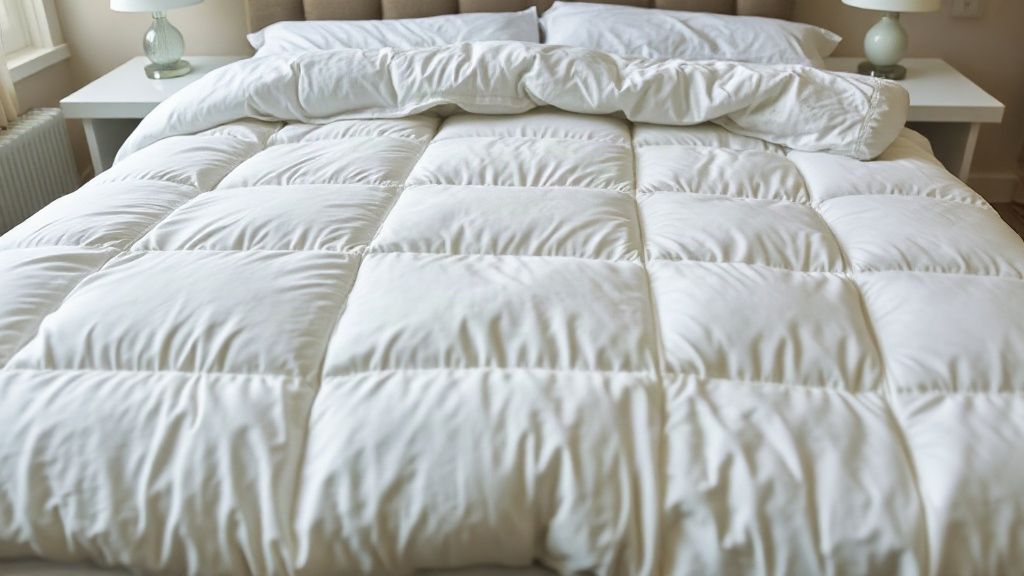
If your king duvet won’t move freely in the drum, the machine isn’t broken — it’s telling you something. The honest choice isn’t between washing methods; it’s between home and laundrette. A duvet that can’t tumble properly during the cycle won’t rinse or dry properly either, leaving damp patches and compacted filling.
Most UK households have a washing machine rated between 7 kg and 9 kg. Most king-size duvets, when dry, weigh 6 to 7 kg. Add water and that weight roughly doubles during the wash. Your machine isn’t broken — it’s just not built for the load. If you push it, you risk more than just the machine. You risk the duvet itself: poor rinsing, detergent residue, and “wet out,” where the filling stays saturated, loses its loft, and never quite regains its warmth.
This guide provides the honest framework for working out what you can wash at home, what genuinely needs a laundrette, and how to care for your bedding without ruining it. If you want a structured way to work through everything that affects your sleep environment, get the Free Sleep Better Checklist and work through it in your own time.
Understanding Your Machine’s Real Capacity
The washability of your duvet depends less on the duvet and more on your machine. Standard UK domestic washing machines are designed for everyday laundry — sheets, towels, and clothes. A duvet, even a single one, pushes those limits. A king or super king? It exceeds them.
A standard 7–9 kg machine is generally only safe for single or small double duvets. The dry weight of a single duvet sits around 3–4 kg, which gives the machine enough headroom to agitate, rinse, and spin properly. A king duvet typically weighs 6–7 kg dry. Once it absorbs water, you’re looking at 12 kg or more inside the drum. That’s not a wash; it’s a structural test.
When a duvet is too heavy for the drum, it doesn’t move freely. Detergent doesn’t distribute evenly, and the rinse cycle can’t flush out residues. What comes out looks clean but feels heavy and damp in pockets. The filling compacts, loses its loft, and stops trapping air — the “wet out” effect. It’s not a manufacturing defect. It’s physics.
This is why the common complaint about duvets going flat or lumpy after washing isn’t always about the filling degrading. Sometimes the duvet never dried properly because the wash cycle couldn’t finish the job.
Work through these three questions to assess your machine:
- Is it a king size or super king? If yes, assume laundrette unless your machine is 10 kg or above.
- Can you fit a closed fist inside the drum with the duvet in it? If not, there’s not enough space for proper agitation.
- Does your machine’s manual mention a duvet or bedding cycle? If it doesn’t, the manufacturer is telling you something.
If you’re unsure about your machine’s capacity, check the badge on the inside of the door or search the model number online. It’s a thirty-second check that can save you a ruined duvet.
The honest answer is that most UK renters with a standard 8 kg machine should plan to use a laundrette for anything above a small double. It’s not a failure of your setup; it’s the reality of machine sizing versus bedding sizes. If you’re buying new, a 10 kg machine is increasingly common and solves the problem for most duvet sizes without a trip out.
Drying: The Hidden Challenge
The wash is done, but now you have to get it dry. This is where many people undo their hard work. The tumble dryer feels like the obvious solution, but for a lot of bedding, it’s the wrong call.
Heat is the enemy of most duvet fillings. Down and feather can clump and lose their insulating loft permanently at high temperatures. Synthetic fillings like hollowfibre can shrink or melt slightly, distorting the casing. Even cotton fillings can end up compressed if tumbled for too long. If the duvet is still damp in pockets, you’re drying the outside while the inside stays wet. That musty smell that appears a few days later isn’t the duvet being dirty; it’s moisture trapped inside the filling.
Tumble drying also takes time. A king-size duvet in a domestic dryer can take three to four hours on a low heat setting, and it still might come out damp. Running multiple cycles costs electricity — easily £3–5 per session — with no guarantee of a good result.
Air drying is usually better, but it’s not as simple as hanging it on the line. A saturated duvet is heavy. If you hang it over a rotary line in summer, the weight can strain the fabric at the attachment points. In winter, it can take two to three days to dry fully. If it isn’t dried in a warm, ventilated space, it will pick up ambient moisture and start to smell.
The practical approach: after any wash cycle, run a high-speed spin first to remove the bulk of the water. Then move the duvet to a well-ventilated room, lay it flat, or drape it over several airers. Turn it every few hours. A fan directed at the duvet makes a significant difference. In a hurry? A laundrette typically has commercial dryers that reach the right temperature and have the capacity to dry a king-size duvet in one cycle — usually forty to sixty minutes. For anything above a single, that’s often the cheapest, most reliable route.
One thing worth flagging: if you wash a weighted blanket, check the label carefully. Some weighted fillings, particularly glass beads or sand-type fills, can be damaged by heat. If the label says “tumble dry low,” test with a short cycle first. If it says “do not tumble dry,” air dry only.
Replacement Thresholds
There comes a point where no amount of careful washing will restore your bedding. Knowing when you’ve hit that point saves you wasted effort.
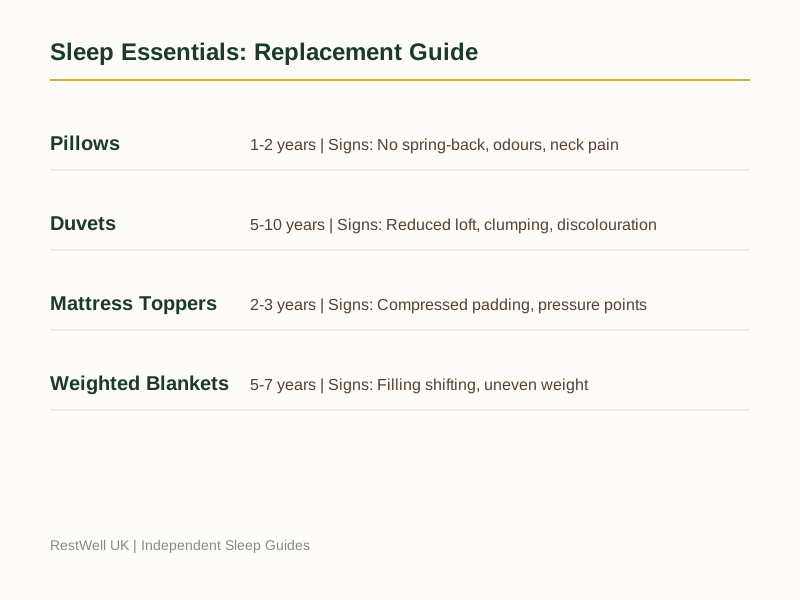
Pillows are the most frequently replaced, usually every one to two years. The signs are straightforward: they don’t spring back when folded, they smell even after washing, or you wake up with a stiff neck because the loft has gone. Once the filling is compacted, washing it just produces a cleaner flat pillow. It won’t fix the problem.
Duvets last longer, typically five to ten years depending on fill and usage. The signs of age are similar: reduced loft (it looks thin), visible clumping, yellowing that doesn’t shift, or a general loss of warmth. If you find yourself reaching for an extra blanket when you never used to, that’s a signal. The duvet isn’t doing its job.
Mattress toppers sit somewhere in between — two to three years is a reasonable lifespan. They take more body weight than duvets, and once the padding compresses, it doesn’t recover. A topper that’s lost its give is actually worse than no topper at all, as it creates pressure points rather than relieving them.
Weighted blankets are different. Once the filling starts shifting — beads leaking or pellets clumping in one corner — the weight distribution is compromised. A weighted blanket that’s lost its even fill doesn’t deliver the calm-inducing pressure it was designed for. Most owners report that five to seven years is the limit before fill integrity degrades noticeably.
The short version: if washing restores the appearance and feel, wash it. If it doesn’t — if the loft is gone, the fabric is worn, or the yellowing is set in — replacing it is the right call.
Avoiding Damage During Cleaning
Most damage to bedding doesn’t happen in use. It happens in the wash.
Biological detergent is the wrong choice for most duvets and pillows. Enzymes in biological formulas are excellent at breaking down proteins like sweat and body oils, but they also break down natural fibres over time. Down and feather fillings are particularly vulnerable. Use a non-biological detergent, or one specifically formulated for delicate or technical fabrics.
Fabric softener does more harm than good. It coats fibres to make them feel softer, but that coating reduces absorbency and can build up inside fillings. Skip it, or use a small amount of white vinegar in the conditioner compartment instead. It softens without building up.
Hot washes are rarely necessary. Most duvets and pillows are best washed at 30°C or 40°C on a gentle cycle. High temperatures can set stains, degrade fillings, and cause shrinkage. The exception is if someone in the household has allergies; in that case, follow the manufacturer’s guidance and accept the trade-off.
Overloading applies to pillows as well as duvets. Two pillows in a standard machine is often too much. One pillow per wash, or two in a large 9–10 kg machine, is the practical rule.
Always check the care label. It’s the most specific guidance available for your product and overrides any general advice. A general rule is to wash your duvet every three to six months, increasing frequency to every two to three months if you have allergies, share a bed with a pet, or tend to sleep hot and sweat heavily. The duvet cover should be washed more frequently, typically every two to four weeks with your regular sheets.
Regarding weighted blankets, only wash them if the label explicitly permits it. While most are machine washable, they are extremely heavy when wet — a 7 kg dry blanket can weigh 15 kg or more saturated. A standard domestic machine may struggle, and the weight can damage the drum bearings. If it fits, wash on a gentle cycle at 30°C and air dry. If it doesn’t fit, a laundrette with a large-capacity machine is the practical option.
Yellowing on a duvet is usually caused by a combination of body oils, sweat, and detergent residue that builds up over time. It’s most common around the head and neck, and it’s accelerated by using biological detergent and fabric softener. Washing on a gentle cycle with a non-biological detergent and an extra rinse cycle helps prevent it, but once yellowing is set in, it can be difficult to reverse.
Duvet Care Lifespan Reference
| Item | Typical Lifespan | Key Signs of Replacement |
|---|---|---|
| Pillows | 1-2 years | Doesn’t spring back, smells, stiff neck |
| Duvets | 5-10 years | Reduced loft, visible clumping, yellowing |
| Mattress Toppers | 2-3 years | Compressed padding, pressure points |
| Weighted Blankets | 5-7 years | Filling shifting, uneven weight distribution |
Your Next Steps
You’re now facing two separate decisions: whether to attempt a home wash or book a launderette slot, and whether your bedding is worth saving or needs replacing. Each requires different resources.
For the home-versus-launderette decision, our How to Wash a Duvet: Step-by-Step Guide walks through the capacity check and safe home washing process in detail. If your machine can’t handle it, that guide also covers what to look for in a commercial launderette service.
For the repair-versus-replace question, When to Replace Your Duvet: Signs It’s Time gives you the specific thresholds for different types of bedding, so you don’t waste effort on a lost cause.
Clean bedding is only one part of sleeping well. If you’ve been putting up with poor-quality sleep and haven’t had a chance to look at the broader picture — your mattress, your room temperature, your evening routine — get the Free Sleep Better Checklist. It’s a free, no-fluff guide to working through the things that actually make a difference to how you sleep.
Explore More Topics
Go deeper on specific topics:
- How Often Should You Wash Your Duvet? UK Guide
- How Often Should You Wash Your Pillow? Expert Advice
- How to Wash a Duvet: Step-by-Step Guide
- How to Dry a Duvet Fast: Tips for UK Homes
- When to Replace Your Duvet: Signs It’s Time
- When to Replace Your Pillow: How Often Should You?
- How to Clean a Mattress Topper: Care Tips
- How to Wash a Weighted Blanket: Step-by-Step
Sources & Further Reading
Note: General guidance only, verify details with a qualified professional or official source.